Wednesday, May 30, 2007

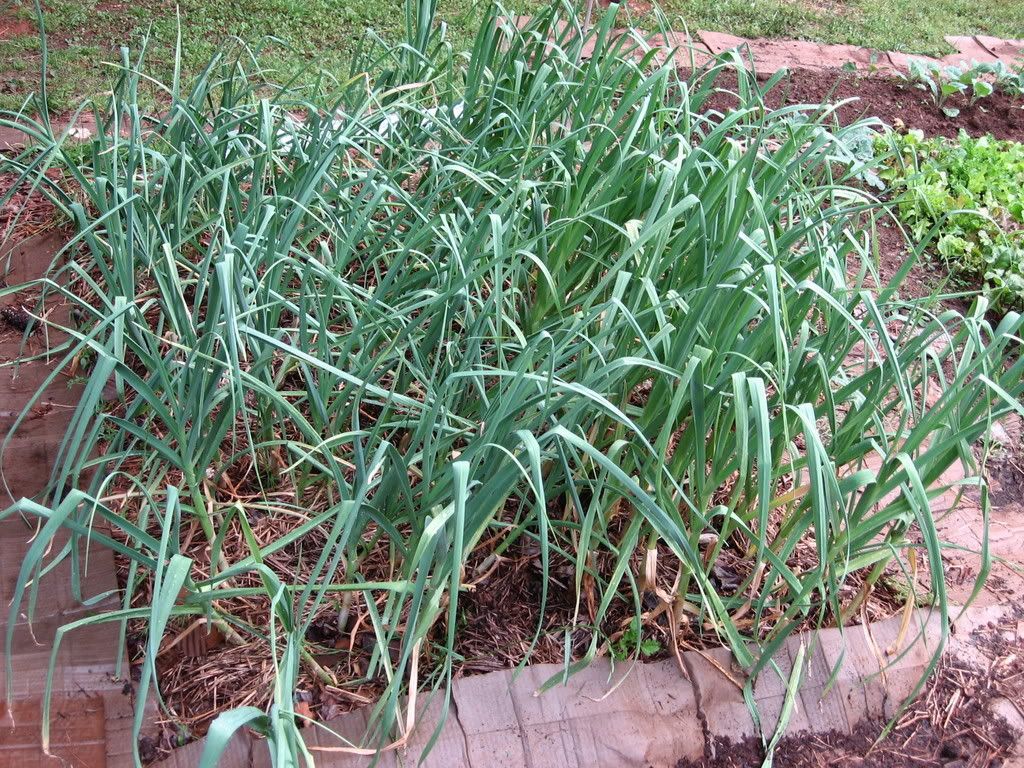
Another Garlic Harvest!

Morning temp: 75F
Afternoon high: 88F
Tonight's projected low: 60F
Humidity: 53%
Wind: NE at 5 mph
Moon: Waxing still, almost 100%

This Morning.

1. It's beena hot day, and with a slight upper back strain, I've done little other than basic household chores & lay some cardboard out in and around the garden to keep down the grass.

This Afternoon.

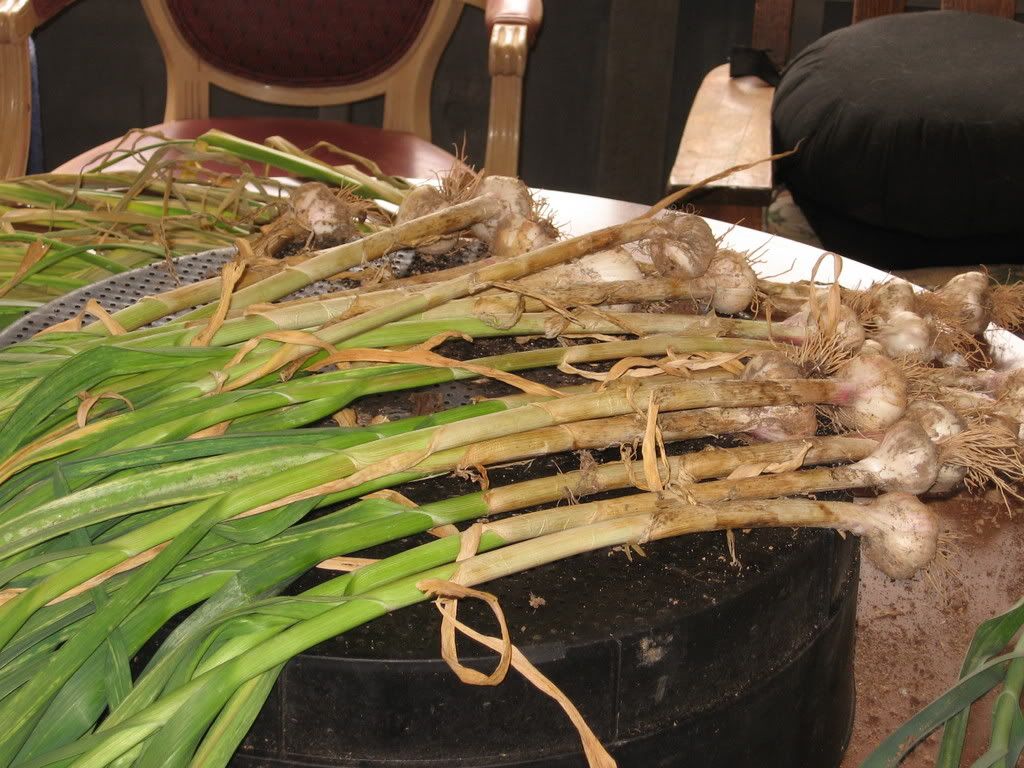
1. M and I brought in a bit more Garlic. I'd say that Bed is about 40% harvested.


Tuesday, May 29, 2007

Summer's coming

Morning temp: 60F
Afternoon high: 85F
Tonight's projected low: 57F
Humidity: 69%
Wind: E at 6 mph
Moon: nearly 100% Full (a good time for transplanting!)

This Morning.

1. It's a beautiful, sunshiny day! We can see the days getting warmer, with day-time highs creeping into the mid-80s, and night-time lows creeping into the 60s. We think we'll be able to keep the Lettuce going so long as the night-time temps remain below 70F. That's what we've heard, so we'll see.

2. I'm spending my morning doing dishes, laundry, sweeping and mopping the kitchen floor, cleaning the bathroom, and learning to make Bread a different way. Thus far, we've learned to make quite hearty, whole wheat loaves using recipes from the Tsajara Bread Book- an excellent book for beginners, as detailed instructions and illustrations are provided for each step of the process. But we'd also like to make lighter, baguette-style loaves, and we're in the early stages of our first attempt right now. I've turned to a different cookbook, How to Cook Everything, for some new ideas.

This Afternoon.

1. Well, the new Bread recipe (from the book How to Cook Everything), as it turns out, is seriously flawed, calling for just 1 teaspoon of rapid-rising yeast for four loaves. That's a minuscule amount; twice that would be parsimonious. As a result, my baguettes are hardly rising at all, though they've sat up for several hours already. Projections for baking these dense little loaves are less than favorable, unless you like to eat rocks! : (

The funny thing is, even with my tiny amount of Bread making experience, I knew that more yeast was called for, though I was reluctant to disobey the "official" instructions. Is this experience a metaphor for life, or what?

Monday, May 28, 2007

Conversations with open minds, how refreshing!

Morning temp: 59F
Afternoon high: 84F
Tonight's projected low: 60F
Humidity: 88%
Wind: E at 5mph
Moon: Waxing, close to 100%


This Morning.

1. As the month of May nears its end, we celebrate a minor success here: we have not used our clothes drier since April, nearly one month! Hanging wash out to dry on the nylon line strung across the yard has actually become a rather meditative exercise in the sunshine and wind, one to which I look forward. Before long, we hope to purchase a hand washer & ringer, which will cut electricity entirely out of the equation (though our water still comes from a centralized municple source). Moroever, the grey-water from our wash, with the help of biodegradable laundry soap, can be used to safely water the Blueberry Grove!

2. Last night we met up with one of M's sons, J., who is home visiting from his college home in Chicago. Luckily, I managed to talk not only with him but with several others we met during the evening about our Homesteading endeavors, and about the movement in general. Everyone's interest seemed peaked when I used words like, "self-reliance", "simplifying our lives", "doing more for ourselves", and even "Homesteading". As is often the case when I get to talk with bright, thoughtful folk, so doing helped me to think through my own understanding further and more clearly than I had previously. This is one reason I loved teaching.

One important dynamic that emerged in these conversations was that Homesteading is a continuum, rather than a set of absolutes. That is, one may engage Homesteading at different levels of intensity and still be a welcomed member of the movement. Some notable Homesteaders have mastered the art of self-sufficiency to such an extent that they have gone several months without spending any money whatsoever, even in the harsh Australian outback-http://www.lintrezza.com/. Others have learned to integrate lush, bountiful gardens, solar-panel energy production, and making their own bio-fuel in their garage into a typical suburban neighborhood, without infuriating their neighbors-http://www.pathtofreedom.com/. We respect and admire these advanced approaches, and would also like to suggest a gradual, incremental approach that can be made to fit any lifestyle whatsoever -http://www.urban-homesteading.com/. Basically, anything we do to increase our self-reliance, use fewer resources, save money and increase our "at home time" may start us down the Homesteading path! Each of these points is of import, and deserves a bit more detail.

i. While the Universe contains an infinite supply of wealth, riches and resources, our current civilization is not doing a very good job of making them equally and reliably available to everyone, nor are we making good decisions as to which resources to use. Clearly, 6 billion Earthlings hooked on oil as a primary power source is not avery good idea, and has created an unfortunate ecological, economic and political reality - one that we will solve, but that may take some serious discipline on everyone's part. Fortunately, some brilliant and disciplined minds are already hard at work on our behalf - http://www.cheniere.org/

Also, right now (in 2007), the money we Americans make is at an all-time low in its purchasing power. While wages have risen in terms of dollars over the past sixty years, what those dollars are capable of purchasing has plummeted. My grandfather (who had a 5th grade education), for instance, worked as a truck-driver and then as meat-slicing machine salesman and made enough money to provide for his family: a nice house in New England, two cars, a lake-side cottage for weekend get-a-ways, a college education for his daughter, and ample retirement savings on his income alone. His experience was typical in 1950, when the middle class was growing at an amazing rate. Two generations later, however, the number of families able to achieve this level of prosperity on two incomes is exceedingly rare. I do not want to paint an apocalyptic or hopeless picture here. Like our ecological difficulties, these economic circumstances simply represent a problem, which we will solve. Fortunately, brilliant thinkers are also hard at work in this arena doing just that - http://www.nesara.us/pages/home.html.

Until new, cleaner and saner realities are embraced, the benefits of using fewer resources and saving money are obvious. I think the following basic realization lies at the heart of the Homesteading movement: "I'll happily learn to cut back where I can do so with a reasonable amount of effort, for instance, purchasing as much of my food as I can from local farmer's (perhaps at real farmer's markets), since the food available at traditional grocery stores is shipped across the country (or even from other countries) and uses a tremendous amount of gasoline (nearly 60% of American gasoline consumption is used to transport food that could be - and used to be in decades past - grown locally!) and thus contributes mightily to greenhouse gases, global climate instability and all of the political amd military disasters that result from our dependence upon oil".

ii. Given these weighty considerations, it's often overlooked that the farther we go down a Homesteading path, the more calm, peaceful, "at home time" we'll get. One of the primary reasons Helen and Scott Nearing (early 20th century Homesteaders who have inspired millions around the world with their most excellent books, chiefly Living the Good Life) was to increase the amount of leisure time in their lives. They time and energy to play music, paint, write, rest, read and enjoy one another's compant and the natural world around them, and they were weary of what they called "the work treadmill": we go to work so that we can purchase things that in many cases we don't need but have been trained by advertisers to desire. But we never seem to get to the point where we have enough money and things to get off the treadmill. Sound familiar?

Once they learn to discard the "work-a-holic" tendencies learned in mainstream culture, Homesteaders are amazed at how learning to do more for themselves allows them to gradually disengage from the "work treadmill", spending greater amount of time at home, at peace. It's exciting to think what will result as Homesteading (on any level) continues to spread as a system of values, philosophy and lifestyle. Our consumption of harmful things will diminish, as our consumption of truly worthwhile things - peace, rest, health producing food, time and energy for creative endeavors and relationships - will grow!

Sunday, May 27, 2007

If you can't Beet it...do something different

Morning temp: 58F
Afternoon high: 86F
Tonight's projected low: 59F
Humidity: 73%
Wind: N at 0mph
Moon: Waxing, 90%+


Corrections.

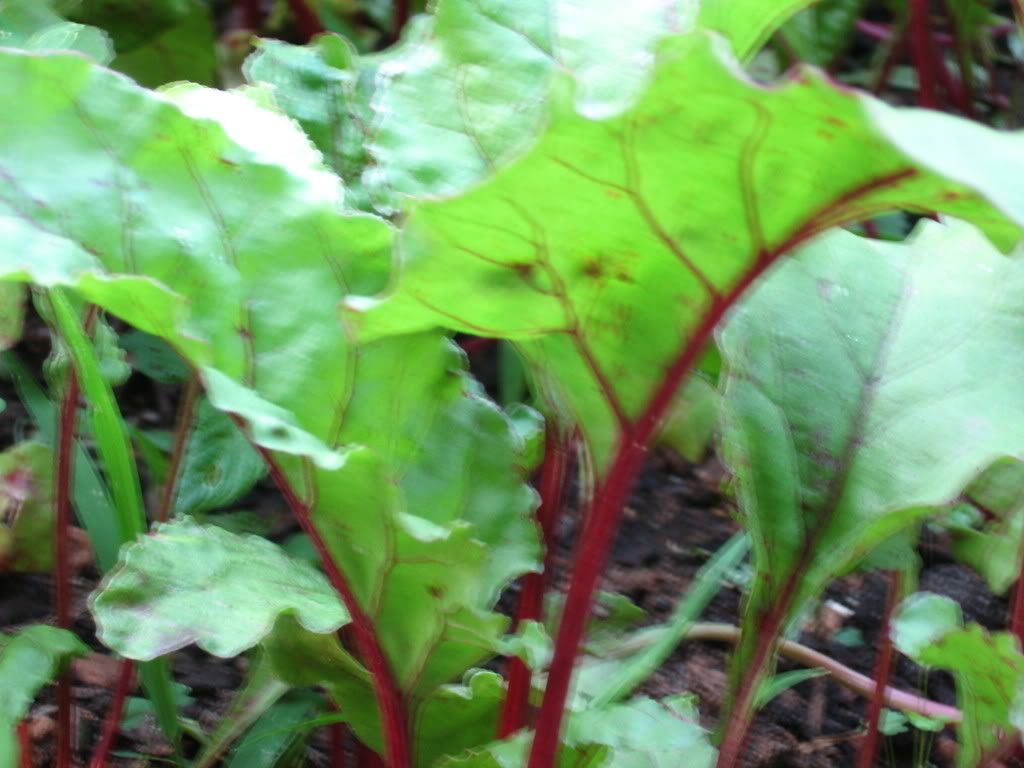
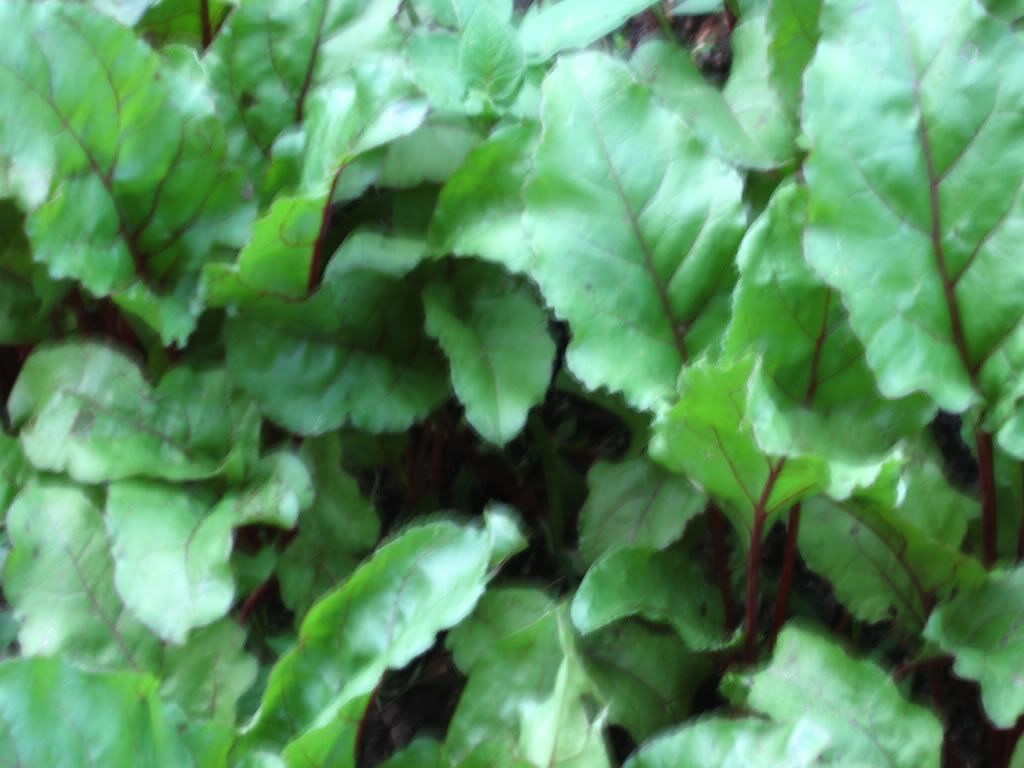
On yesterday's post, I have a photo of the Cucumber Patch where a photo of the Beet Patch should be. When I attempt to correct it, a cascade of coding errors ensues. So, here are the correct shots.

1. A Beet Leaf close-up...


2. A thriving Beet Patch!


This Morning.

1. It's a warm Sunday morning, about 70F, though there's a cool breeze blowing through every now and again. After a long session on the Betar (a table using resonant sound for deep relaxation and healing that I use with clients regularly but, for some reason, often forget to use on myself; you can read more about it in my earlier posts or at http://www.kellyresearchtech.com/) last night, I'm finally able to slow down, enjoy my coffee on the back porch overlooking the Garden. I've been thinking about how "busy" I've felt lately, how for a week or more now I've been fighting back a hurriedness, which of course entails an impatience and frustration at "not getting enough done". Sadly, I've felt this way even when I'm getting things done!

At the same time, I've been drawn back to Benjamin Hoff's charming book, The Tao of Pooh. This book was inspired by the overlap Hoff thought he saw in the American classic "Winnie the Pooh" stories and one of the Three Teachings that make up the complex web of indigenous Chinese religion some Western scholars conveniently label "Taoism" (the other two being Buddhism & Confucianism). "Taoist" teachings and practices - as Hoff points out - are themselves quite diverse, encompassing a wide range of philosophical, monastic and folk traditions. Put differently, there are many different ways one might live and still consider oneself a "Taoist", e.g.., practicing Tai Chi, reading sections from the Tao Te Ching each day, studying acupuncture, using Chinese herbs, and so forth. This morning it's the highly practical teachings of both Pooh and many of the Taoist philosophical traditions I'm concerned with. In the Tao of Pooh, Huff includes the venerable parable, "The Gorge of Lu", which will start us off in the right direction, I think. It goes as such:

"At the Gorge of Lu, the great waterfall plunges for thousands of feet, its spray visible for miles. In the churning waters below, no living creature can be seen. One day, Confucius was standing at a distance from the pool's edge, when he saw an old man being tossed about in the turbulent water. He called to his disciples, and together they ran to rescue the victim. But by the time they reached the water, the old man had climbed out onto the bank and was walking alone, singing to himself. Confucius hurried up to him. 'You would have to be a ghost to survive that;, Confucius said, 'but you seem to be a man, instead. What secret power do you possess?' 'Nothing special,' the old man replied. 'I began to learn while very young, and grew up practicing it. Now I am certain of success. I go down with the water and come up with the water. I follow it and forget myself. I survive because I don't struggle against the water's superior power. That's all'.

How does the old man survive the raging currents of the pool ("in which no living thing can - ordinarily - be seen")? He doesn't fight against the powerful tides and forces he feels pulling him this way and that, but flows with them. He practices what is called Wu Wei, literally "not-striving" against the natural (and sometimes the social) world. How does he accomplish this, when his natural instincts upon being plunged into deep water and strong currents would surely be to gain control of the situation by swimming to the top? Of course, striving against the pool's fierce current would have quickly worn him out and ended his life. Clearly, the old man had achieved a profound level letting go of the need to control. It's interesting that the story implies that both (i) the old man did not fall into the pool accidentally, but chose to extend his practice of Wu Wei (pronounced "Wu Way") to this ultimate level (ii) Confucius did not understand anything the old man was about, suggesting of course a significant difference in philosophy and practice between these two schools, "Taoist" and "Confucian". What's the point of the story? No doubt that living well in the world requires Wu Wei, learning to let of of our deep-seated need to control the forces around us, and to develop the corresponding ability to flow harmoniously with the way the world is. This does not mean, necessarily, that we can't work and hope to change things for the better, but that in so doing we should not find ourselves in the position of "striving", pushing, forcing, fighting and so on. The best tailor, the Tao Te Ching teaches, does little cutting.

So, we have the parable, some sense of what it means, now we must apply it to our 21st century lives. I've no plans for leaping into dangerous tidal pools. It would be both arrogant and foolhardy to think I could accomplish in one day what Taoist sages took years, even decades, to achieve. In our "I must have everything I desire immediately (and I don't want to know about the toll it places on the environment or on other human beings who worked to bring it to me)" culture, this is a point forgotten and, when pointed out, resisted or even resented in many communities: some aspects of spiritual growth take decades of discipline and practice and there's no way around this, so we may have to "put in dollars and get back nickles" for considerable time. My friend E represents a refreshing counter-example to this trend. Her elegant and inspiring book, The Four Spiritual Laws of Prosperity, took her twenty years of teaching and practice to write, and it was worth the wait!

So, can I apply these teachings to simpler, more mundane matters? Perhaps my persistent worries that "I'm not getting enough done" represent my own attempt to control the flow of work each day. To live more healthily and more happily, I'll need to practice setting this habit aside. It's quite well established in me, this urge to achieve the maximum amount of work each day. But every day can't be a mid-summer harvest. If so, the Earth would all too quickly wear out.

When I first went to college I studied classical guitar with a brilliant and internationally known teacher, John Sutherland. I was fortunate to be accepted into the program, as John was considered a Master Teacher by the world's best players, and was regularly sent the best students by them. I had only begun to study the guitar some six months prior to applying for entrance into the program. Many days I practiced 8 hours or more and just barely was admitted (or so it seemed to me). One day in a private lesson, I said to John, "I'm worried that I'm falling behind in my playing." "Behind what?", John asked. "Behind where I should be," I answered. "That's ridiculous," he laughed, "you are where you are. There's no ahead or behind." I'm not sure how, but this story seems to be connected to the above discussion. Perhaps it's another example of needing to control the flow of work. I think I have a great many of such stories, and that it's time to take seriously the Gorge of Lu.

This is a point that I think sometimes gets lost in academic discussion of comparative religion. Whether or not "all religions are paths to the same destination," and whether or not the claims various religions make are true or false, our religious and spiritual traditions can be, at times, "wisdom traditions", that is, repositories for insights that are fantastically useful in living life well, rather than less well.
Saturday, May 26, 2007

Signs of the future

Morning temp: 56F
Afternoon high: 85F
Tonight's projected low: 60F
Humidity: 54%
Wind: Wind: N at 0 mph
Moon: Waxing, 80%!

1. M and I were talking last night, and we came to the realization that our current Garden, while some 1,200 square feet (30' X 40') in size, represents just a fraction of what we want to grow. Increasingly, our planning for the future is drawn toward our likely migration northward, to the "The Land," the 120 acres in upstate New York that awaits us, and for so many reasons. For instance, The Land is replete with fresh water springs, far more than enough for all of our Homesteading needs. Conversely, with the ongoing droughts here in the suburbs of Zone 8, we've already been limited to one day a week watering. This clearly limits our self-reliance on a very basic level: no water, no Garden, no food, save the taste & nutrient-free varieties that have been trucked across the country and are for sale at our local grocery.

Some Good Signs.

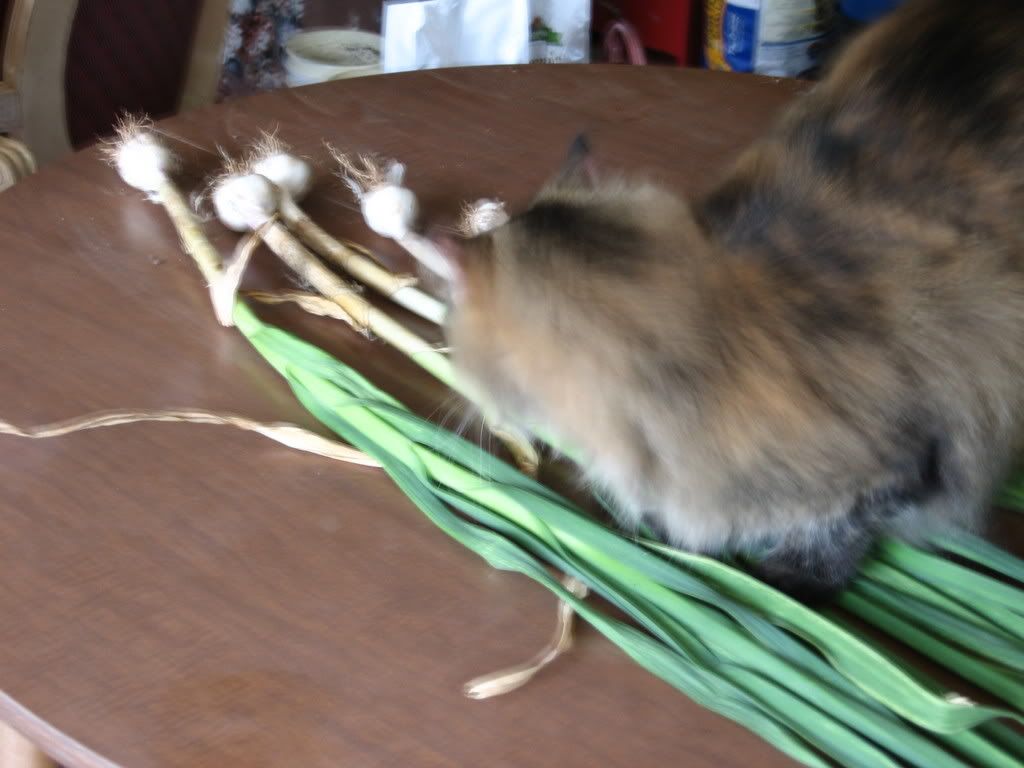
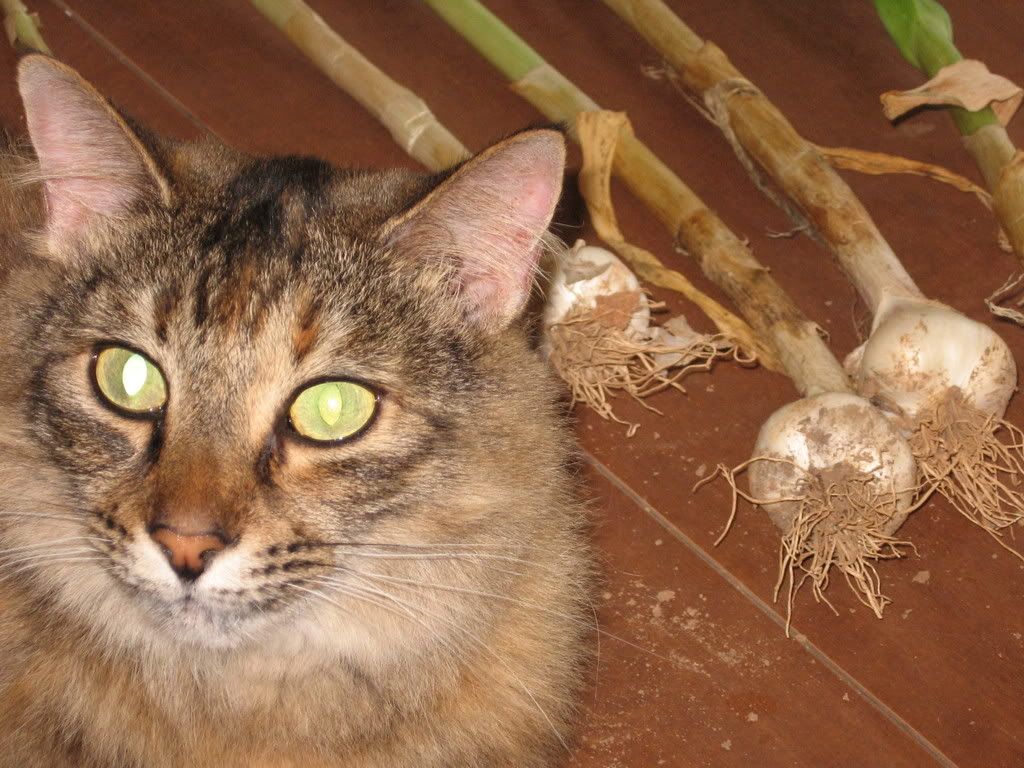
1. Winter Garlic is nearly ready for harvest... Arjuna certanly thinks so.


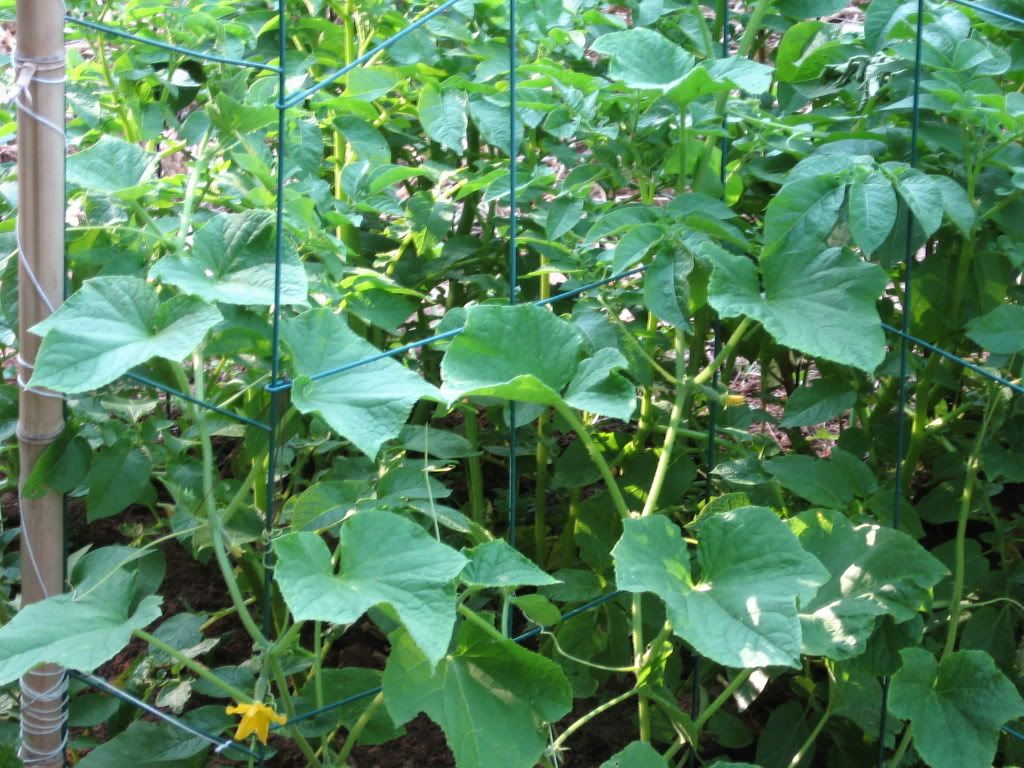
2. Cucumbers growing, blooming!


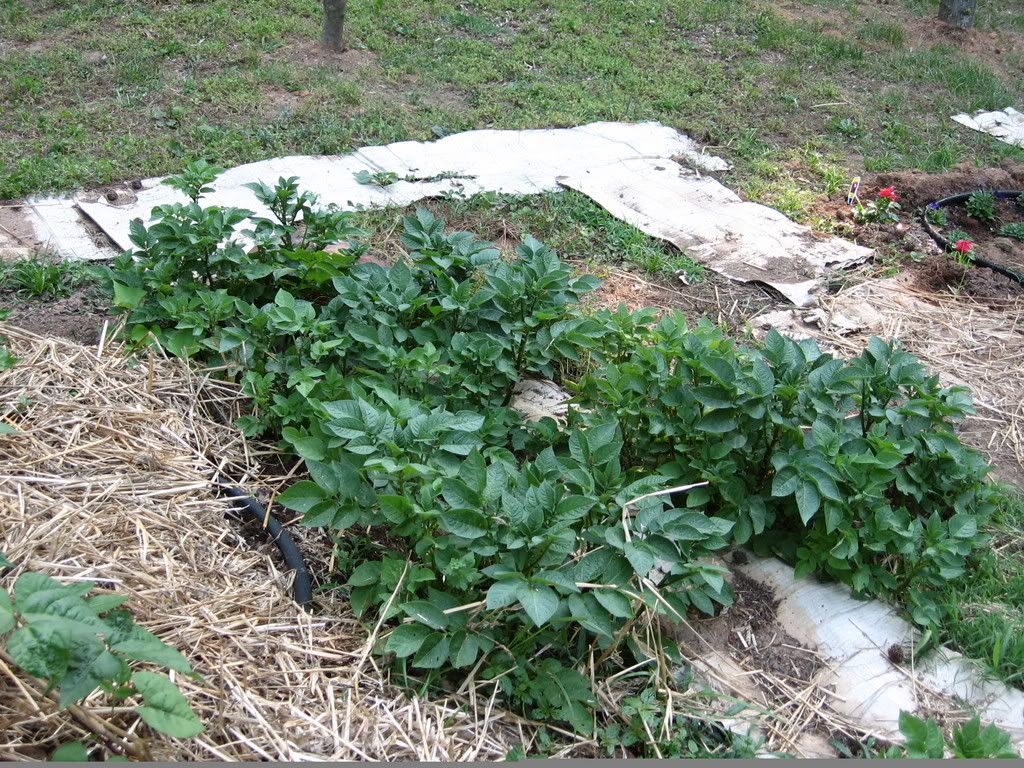
3. Unauthorized & unruly volunteer Potato patches abound!


4. Beets are very healthy...


...and the Beet Patch is thriving! Until now, we'd never grown Beets successfully.


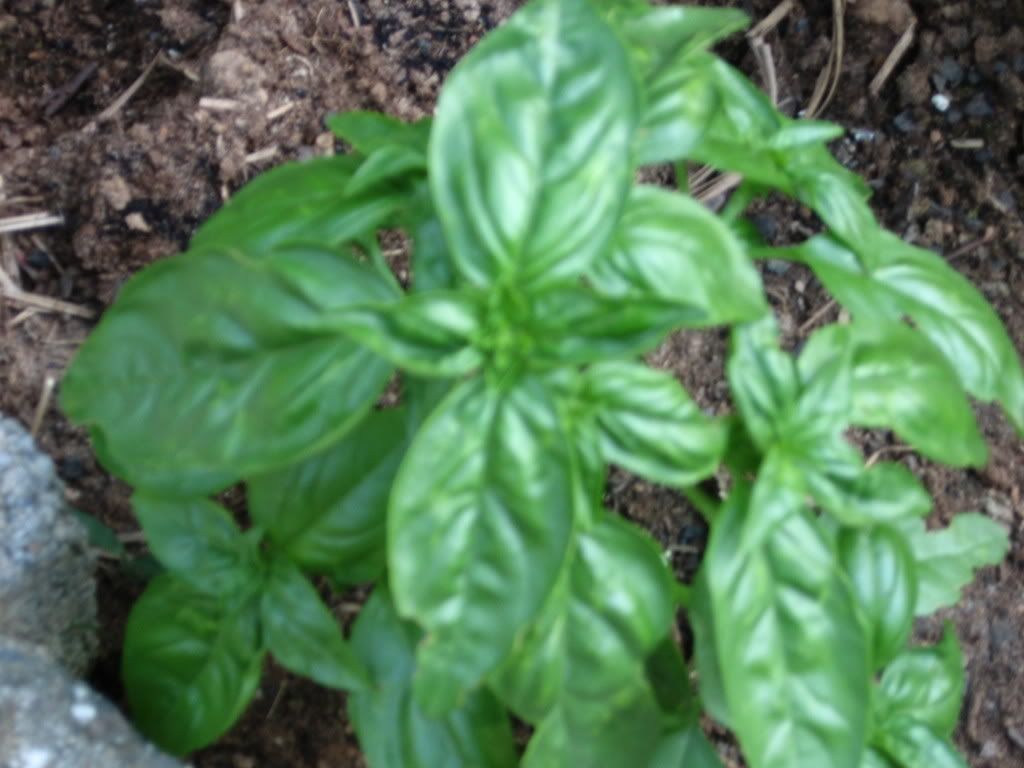
5. Basil is standing tall!


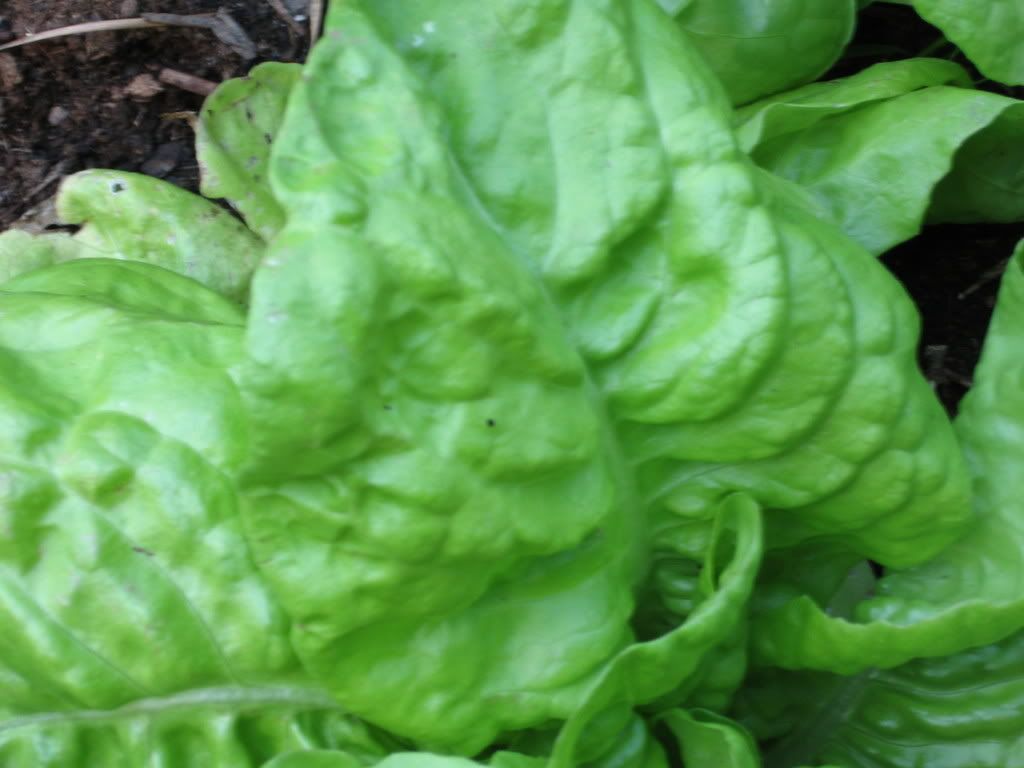
6. Butcrunch Lettuce, looking good!


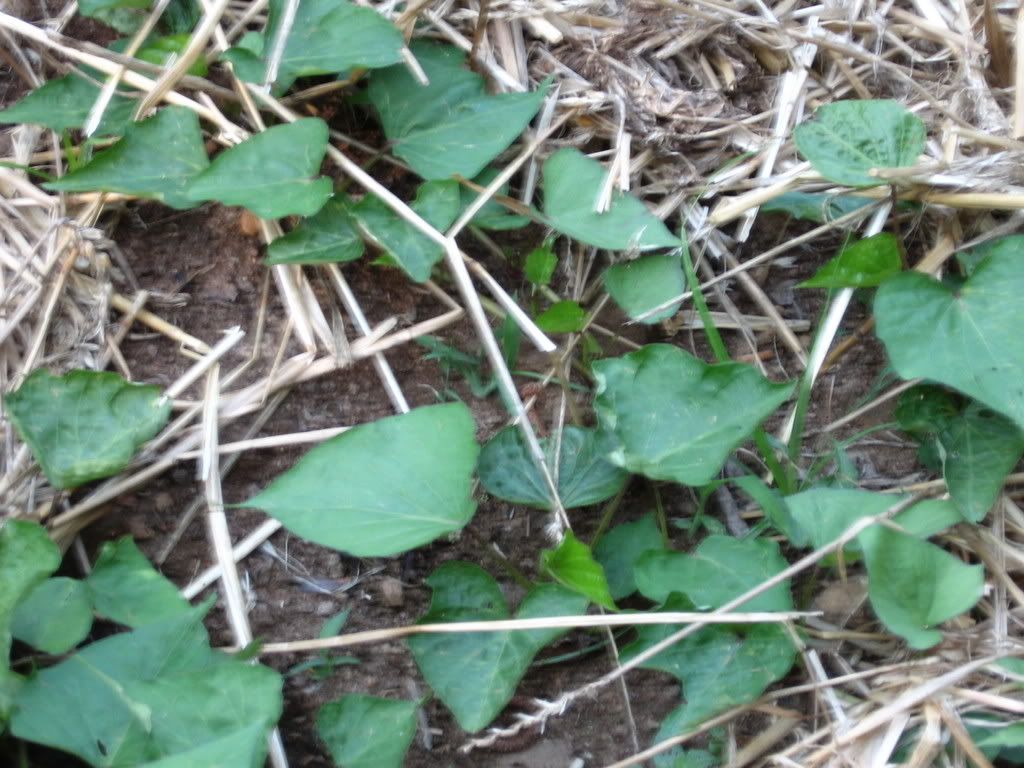
7. Sweet Potatoes are spreading out.


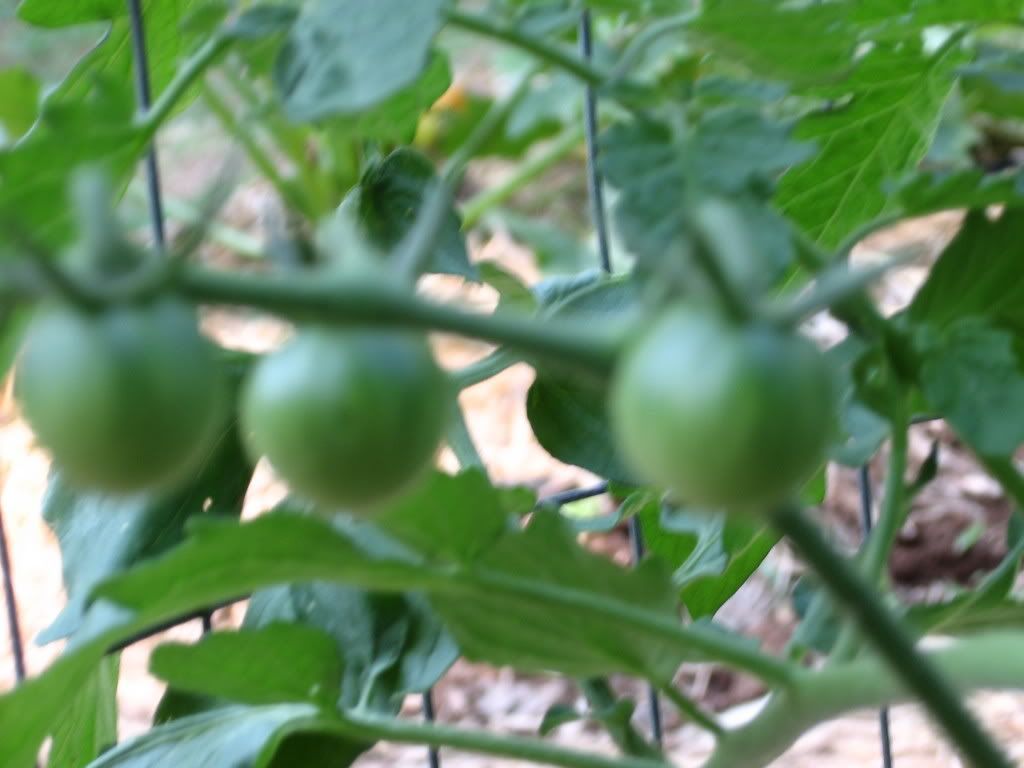
8. Baby Tomatoes have appeared!

9. More Squash blossoms!