Thursday, April 5, 2012

Bread Today

Today's Weather in Northeast Georgia
70F, rainy, cloudy, and sunny
Wind: SW 7mph
Humidity: 56%
Moon: waxing, 99% full!

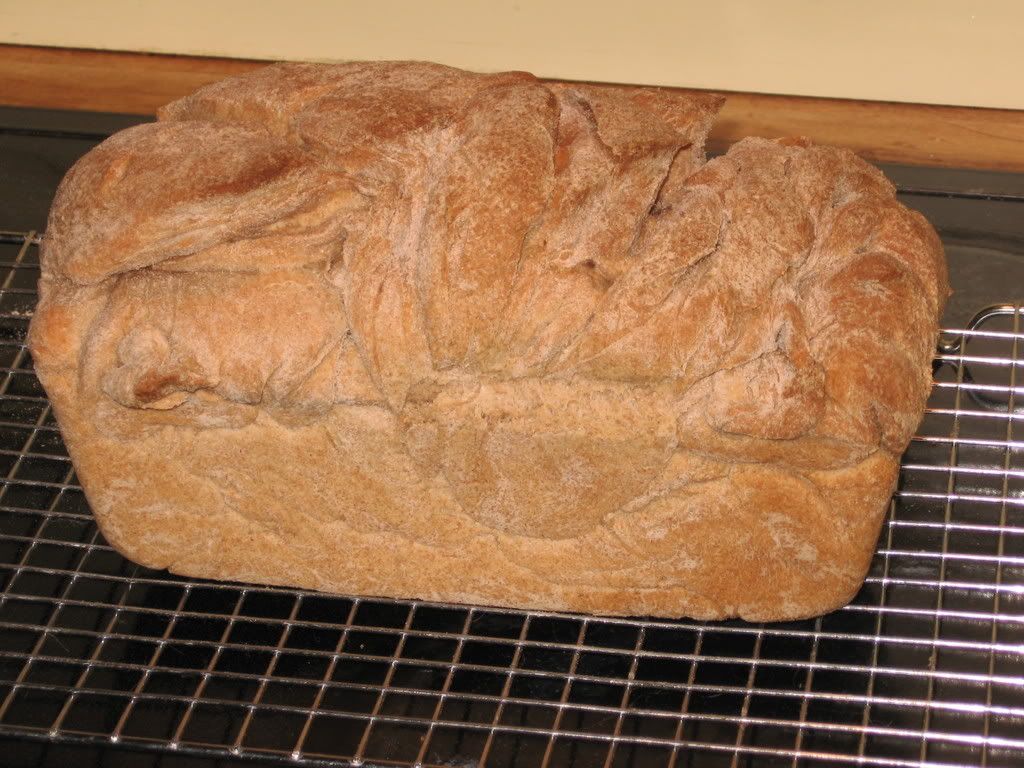
M just took her new and "experimental" loaves from the oven. Made with honey and butter, they look and smell amazing. Perhaps she'll post her recipe.

I'm moving ahead with plans for a doctoral dissertation on the writings of Helen and Scott Nearing (e.g., Living the Good Life, 1954), and the modern homesteading movement's relationship to these texts. How, for instance, do homesteaders that come after the Nearings think about the portrait and standards the Nearings established? There's more to write about as well. I'm interested, for instance, in what women homesteaders emphasize relative to men. Perhaps most of all, I'm interested in the ways in which homesteaders ritualize their time and space in search of a calm, peaceful, orderly, and healthy world.

Recently, M and I have been thinking about the metro-Atlanta properties would work best for further developing our homesteading practices, the Pine Lake property we mentioned earlier, or the property we currently rent, a good bit farther out from the Emory and GSU, were we currently study and (I) work. She's started vegetable and flower seeds for this year's Spring/Summer garden. And I'm looking for a period of time in which I'm well-rested and able to get the old and new garden areas ready for plants. So far, not much happening there, and this term;s schedule is very full up through early May, and then it's time to prepare for summer courses I'm teaching beginning in mid-May. Hmmmmmmm, time for a highly pragmatic plan. Still, if I can carve out/come upon just one well-rested day, starting early in the morning when it;s still cool, I could prepare beds in the new garden (an in-ground swimming pool we filled in a few years back).


Monday, March 26, 2012

Thinking ahead

Today's weather:
Sunny, warmer, and less breezy than yesterday
Temperature: currently 54 at 7:40am, with a high of 81
Wind: NW 7mph
Humidity: 88%

We're starting to think, talk, and plan, for purchasing our own property, one that would be suitable for homesteading and that also makes sense given the other dimensions of our lives, for instance, is reasonably close to our graduate programs and places of employment. One location that is receiving serious attention is the small "city" of Pine Lake, which, in the 1940s, was a quick country get-a-way for downtown Atlanta types, and now represents an odd, quiet, little community of bungalows tucked around a small lake, where properties are still affordable and little to no "development" seems to be indicated.

We want a home that is comfortable to live in (we're nowhere ready to build or even renovate anything ourselves), with yard and sun enough to sustain a garden that could supply all of our vegetables, a blueberry patch, and some fruit trees. Ideally, I would like a wooded lot adjacent to or at least nearby, as well. While we want to retain central heating, AC, electricity and Internet, etc., I would like to add-in a number of dual systems, such as cast-iron wood-burning cooking stoves, and ultimately solar panels and a composting toilet. First thing's first, though, we've got to make some progress on purchasing a property, whether in Pine Lake or elsewhere.

One property we're interested in is below, as it's likely attainable at a reasonable price (we hope) and there is at least one lot (maybe two) adjacent to it for sale also. If you would, please keep us and a great homesteading property like this in your mind!

Sunday, March 25, 2012

New Options

Today's weather were we live:
Temperature: 73, alternating sunny and big clouds
Wind: NW at 14 mph; it seems very cool and breezy
Humidity: 29%

As I consider various dissertation topics for the PhD program I'm currently working my way through (just now at the end of year 2 in a 5 year program), I'm giving serious thought to modern homesteading as a research topic. Rebecca Kneale Gould's book, At Home in Nature, offers some superb historical and theoretical resources, as she writes about "homesteading" from Thoreau to Wendel Berry, with special emphasis upon the Nearings.

More, a dissertation (basically, a book-length project that takes three-years to complete and that ideally becomes an actual book) focused, for instance, upon the writings of Scott and Helen Nearing and the ways in which these writings are selectively and creatively taken up, applied, argued with, rejected, and so forth, by later generations of homesteaders, would bring together personal and academic aspects of my own life, making room in my mind for a life that integrated homesteading and public intellectual practices.

So, this blog is back. I'll leave all of our previous posts up so that later readers might see clearly the crazy (and indeed embarrassing) ups and downs, in and utter outs, of homesteading we've been through. As read more in Gould's book, I see that we're hardly alone in this, and that the full, complete, and successful switch over to a homesteading life is a radical re-writing of our cultural programming affecting virtually every activity. In the entries that follow, I'll be writing about my research, our attempts to re-imagine "homesteading" in ways that allow us to do everything that we want to do (e.g., have a blog, which requires computers, electricity, an Internet connection), and our efforts aimed at re-creating some basic homesteading elements here at a suburban property we rent.

Thus far, we've been collecting our compostable garbage in a bowl each day and I'm taking it out to the old compost bin each evening. I'll need to do some work with leaves and soil and straw - adding them to the bin - here soon. It's not very ambitious, but with so much other work required of us, graduate programs and jobs, it's the best we can do toward a natural, organic (i.e., not forced) approach to re-beginning.

Friday, November 25, 2011

a voice from the future...

So, it's been three years since our last post. For good or bad, we've done very little gardening and set aside entirely any thoughts of serious urban homesteading. Instead, M has refied her expertise in the field of labor and delivery, has made it about half-way through a master's program in public health, and seems to be on the verge of significant professional breakthroughs. I've completed a second masters degree (in religious studies) and entered the doctoral program in American religious cultures at Emory University. I'm currently about 2/5 of the way through, figuring out my dissertation topic and preparing for comprehensive exams while completing coursework. Since our last post, our wonderful dog Helen has passed away. Arjuna (the cat) is older and larger but well. And we have a new dog, Jackpot, adopted from a lovely family nearby.
Today, in the beautiful afternoon sun, I took down much of the garden assembled back in 2007. Over the last two years, as our gardening efforts gradually faded, the garden became severely overgrown, the untreated-bentwood fencing falling down, etc. At least for this winter, we'll have no more than a very modest herb garden, a 5'X15' bricked-in section that was within the formerly fenced-in garden. Perhaps in Spring 2012 we'll plant additional herbs and who knows, maybe something more ambitious as well.
With all the tearing down today, I'm wondering aboyt the place of serious homesteading and even modest gardening in the lives of ordinary people. When it was our sole focus, I loved it, could get or do enough regarding it. But when something else became our sole focus, that which was of ultimate concern, my interest and energy was impossible to maintain. To be this kind of person has serious advantages and disadvantages.

Monday, March 30, 2009

"Locavores?"

Well, it's been over a year since we've done anything with St. Fiacre's, but we're considering a rather bold plan: one year eating only locally grown/produced food, i.e., becoming "locavores." Since largely abandoning our urban homesteading principles (which seemed necessary with M working fulltime and my returning to the university as both instructor and postgraduate student), we've noticed a tendency toward unchecked, undisciplined, self-distructive, headonism in our diet and lifestyle. Not that we have become crack-addicts, but that, without an "organizing principle" that says otherwise, we find ourselves all too frequently sitting in front of the TV eating pizza and candy and drinking soda!

We need a much better organizing principle, and badly. Of course, we've kept up our garden, eaten many of M's great home-cooked meals, and been shopping at local farmer's markets from May - October. But we need something with a sharper edge, so to speak. We need, in academic-speak, a mythology capable of truly informing our beliefs and actions around something intensely intimate, our food.

Wednesday, January 16, 2008

Check out "Path to Freedom"

1. We're not only looking for ways to bring homesteading to our next home, whether that home resides in Santa Barbara, Nashville, Princeton, Boston or Chicago, but also looking for greater balance and harmony in our lives in general. For several months, for instance, we worked very hard at homesteading, perhaps too hard and perhaps somewhat self-righteously, researching and practicing every aspect of homesteading we could reasonably attempt. While helpful in some ways, this ultimately lead to an unbalanced and unsustainable approach, one we could not successfully integrate into the larger matrix of our lives. When I needed to dedicate long hours each day to the phd application process, for example, I found it impossible to reconcile this new work-load with the highly ambitious homesteading plans we'd made (e.g., maintaining a very large garden and blueberry bush grove, building an extensive garden fence from bentwood, planning and building a tool shed, learning to make our own soap, brew our own beer and wine, ordering and using a hand-washer for laundry, researching and planning an underground home, and so on). As a result, when the new work-load appeared, we cold not sustain them both and largely fell away from our homesteading activities, save harvesting from the garden through the Fall months. This was a very sad turn of events, though I suspect that we are not alone in this sort of experience.

2. Towards a far more gradual, incremental, balanced and fully integrated approach to homesteading, we're going back to study carefully those who have been more successful, for example, the Dervaes family from southern California. Their website, pathtofreedom.com, is spectacular! Not only are they highly successful homesteaders in a highly urban environment, harvesting some 5,700 lbs. of organic vegetables from 1/10 of an acre, but they have come to this point via a slow, gradual set of sustainable practices. Many people are talking about ecologically sustainable practices, but it's also worth thinking about psychologically sustainable practices, that is, practices that we can successfully integrate into the larger matrices of our lives, with all of our responsibilities, commitments, goals, and so on.

Looking forward to Lettuce

Today's Weather.
Morning temp: 30 F
Afternoon high: 46 F
Tonight's low: 31 F
Clear, NE Wind at 5 mph
Humidity: 64%

1. With 8 beds of Lettuce planted early in the first days of a new moon and a cold night last night bringing a gentle freeze, we're hoping to have lots of fresh organic greens by the end of February! In fact, if our present beds produce at anything like the one bed we had last year, we'll have a great deal of greens to share with our family members and friends!!! This is an inspiring thought! Of course, prior to distributing the seed, we turned the top 12" of soil with a D-handled fork, and added-in a small amount of worm castings and peat moss left over from last Spring. Given the very thorough "double-digging" work we've done in the past year, turning the soil was soooooooooooooooooooo easy! After spreading the seed by hand across the rows, we very lightly watered each bed, to keep each seed gently anchored in the beds (and thus protected from the wind and from blowing away).

Tuesday, January 15, 2008

Looking to the future

Today's Weather.
Today's high: 50 F
Tonight's low: 27 F
Clear, NW Wind 6 mph
Humidity: 52%

1. Well, M is back at work full-time, mostly healed from her injury. I am through the application process, and we're waiting more or less patiently until March/April, when we should hear from the five phd programs to which I've applied. To make money for living expenses, I've gone back to construction work I have done off and on for many years now. By mid-Summer, we should be relocated to one of five metropolitan areas: Santa Barbara (CA), Nashville (TN), Boston (MA), Princeton (NJ), Chicago (IL), depending of course on the offers of acceptance and funding we get from these superb universities. We're slowly looking at real estate in each area, and the possibility of continuing our homesteading efforts in these places.

2. Meanwhile, we've recommitted ourselves to a Winter/Spring Garden. This past weekend, M had four consecutive days off, and after she had recovered from her 17+ hour shift last Thursday night, we put in 8 rows of Lettuce seed. Each row is about 1.5 feet wide and 5 feet in length. We're experimenting with raised rows, as our earlier beds (which were 5' or more in width) were simply too difficult for M to get to for weeding and harvesting. We're also experimenting with our planting time: M has observed that Lettuce seed may need to freeze (lightly) in order to grow well, and may not at all benefit from a prolonged period of warm days and nights. Given the climate change here, we're thinking that Lettuce and greens may need to be planted quite late into the "cold" weather.

3. We've also re-instituted some of our other homesteading practices, such as composting and hanging our clothing out to dry on a line, at least a few sunny days each week. While we have certainly fallen short of some of our earliest homesteading dreams and goals, we are more knowledgeable, and live differently, than we would had we not explored this path so thoroughly over the past year.

Tuesday, November 20, 2007

Back, finally

Morning temp: 45F
Afternoon high: 72F
Tonight's projected low: 52F
Wind: S at 5 mph
Humidity: 72%
Moon: Waxing, 82%

Well, it's been five months, and it's fair to say that our lives have been significantly overhauled since our last entry. To sum up: M is very slowly still healing her work-sustained broken foot, and has also transitioned to a day-shift position (7am - 7pm, rather than 7pm - 7am); after a ten month hiatus from university teaching, I have decided on a teaching career in mainstream academia, and, accordingly, have spent the past months studying for the Graduate Records Exam, filling out online and paper applications, gathering letters of recommendations, reading and researching various programs across the country, revising an article for publication, and generally winding my way through the byzantine world of applying to PhD programs; our Summer Garden was astoundingly generous, forgiving, and patient, while we harvested continually but otherwise neglected it; we have no Fall/Winter Garden in place this year, since the above projects consumed all of our time and energy, and next Spring we will be moving to one major city or another. How does Homesteading philosophy & practice fit in with these changes, especially when we are clearly not moving to "The Land" in upper-state New York? That's a good question, one we're currently working out.

Friday, June 29, 2007

Morning temp: 72F
Afternoon high: 90F
Tonight's projected low: 69F
Wind: NE at 6 mph
Humidity: 52%
Moon: Waxing, 99% Full

1. It's been extraordinarily hot here, so hot that working outside beyond 11am is a bit insane by my standards. Raised in New England, I've never really gotten used to the heat here in the South, even after 25+ years.

2. We're harvesting some wonderful vegetables from the Garden on a daily basis, Sungold and Black Cherry Tomatoes, Squash and Cucumbers just to start.

3. As M indicated in her post, we've also been visiting a Saturday morning market where local farmers come to sell their food. There seem to be two sorts of folks who attend. The first kind are specifically seeking local produce, either out of some ethical impulse (shipping food across the country is fantastically unwise in about a hundred major ways), or because they realize that food grown locally is not just fresh, they're better food. If you're running Money Mart Empire, and you want to ship California Tomatoes to Virginia, what kinds of Tomatoes will you want? The kind that taste great but don't tolerate shipping very well? Or the kind that tolerate shipping but are washed out and tasteless? At real markets with real farmers, the kinds of tomatoes available are themselves superior to those at Money Mart.

The other sort of patron seems to be the curiosity seeker, perhaps expecting that food grown locally would be far less expensive - after all, what kind of truly successful person would grow food for a living? I believe we were beset by such patrons this last Saturday. While M was picking her way carefully through the crowds of shoppers eagerly buying up the last of Spring Onions, Strawberries and Turnips, one fellow in front of me looked down at the baskets of produce, at the signs posted here and there, at his wife, and burst out in disbelief, "I can't believe you're going to pay this much for some food!", and stalked off to wait in the car. Well, there's always Money Mart, where tasteless veggies sit waiting, after a 2,000 mile, gasoline sucking, climate-warming truck ride!

4. 51% of all gasoline used in America is used to transport food across the country. In 80% or more of these instances, this food could easily be grown locally.

I Can Has Locally Grown Grass-fed Cheezburger?

K and I have started visiting a Saturday morning farmers' market in our county. We've been able to purchase leeks, onions, garlic (for a taste test at home against our own) sweet little Japanese turnips, strawberries, eggplant, eggs, and grass-fed beef. Next week, one of the farmers will have free-range chicken available.

The farmers' market is satisfying on so many levels. First, there is David, the "garlic guy." He has lots of other veggies and eggs -- but the first time we met him he treated us to such an eloquent, intelligent, informative lecture on the various varieties of garlic, when they should be harvested, how long they need to cure before being eaten...that he will always be "the garlic guy." Last week we bought some turnips from him. K was under the impression that he hates turnips. So David grabbed one, peeled it with his pocket knife and sliced us each a little sweet sliver of turnip. K started filling a bag with turnips so fast that he actually started a run on the turnips.

And then there were the strawberries. They were red all the way through. They brought back sense memories from when I was a little girl eating strawberries. These strawberries had a complexity of flavor that isn't available from a strawberry grown 2000 miles away. Kenny was eating them so fast that his hands were a blur.

The beef has been the big prize. I had almost no experience cooking grass-fed beef. It is leaner than grain fed beef, so it can get tough, or dry, or rapidly overdone. The first week we bought ground beef. The second, T-bones. Last week we bought a London broil and a sirloin tip roast.

Here is my recipe for grass-fed cheezburgers.

1 lb grass-fed ground beef
3 bulbs of garlic (no, I don't mean cloves)
1 small onion
1/8 cup + 1 tablespoon of extra virgin olive oil
1 tablespoon of water
1 free range egg, lightly beaten
salt and pepper to taste

Preheat your oven to 375 degrees. Place the unpeeled onion with the unpeeled bulbs of garlic (yes, really, the whole damned head!) in a piece of aluminum foil. Sprinkle with the tablespoon of olive oil and the tablespoon of water. Fold the aluminum foil around the onion and garlic, making a sealed packet. Place in preheated oven for one hour. (This step can be done a day or so in advance -- roasted garlic and onion are actually really nice things to have in your fridge to add flavor to all sorts of recipes.) Remove packet, open it and let the garlic and onion cool. Once cool, squeeze the creamy roasted garlic out of it's skin and peel the onion. Run a knife through these ingredients, making sure that there aren't any too big pieces.

Place ground beef in a medium mixing bowl. Add the egg, the remaining olive oil and the roasted, minced garlic and onion plus a bit of salt and pepper. Mix thoroughly with your freshly washed bare hands. Form four patties. Salt and pepper the outside of the patties.

Cook in a non-stick pan over medium heat with a smear of olive oil. Place slices of your favorite cheese on the patties after you flip them, letting it melt as the burgers cook. I prefer a nice cheddar.

For the safest burger, you should use a meat thermometer and cook your burger to an internal temperature of 160 degrees. As a nurse, I recommend this -- especially if you are using grain-fed beef. I believe grass-fed beef to be less dangerous and I enjoy it at medium rare, 130-140 degrees. However you like your beef, I think using a meat thermometer the first few times you cook with grass-fed ground beef is probably a good idea. It just cooks faster.

Serve on a good bun!

Michael Pollan, in his book The Omnivore's Dilemma, does a really good job of explaining why grass-fed beef is safer (microbially speaking) than grain fed.


Monday, June 11, 2007

The Past Two Weeks.

Morning temp: 75F
Afternoon High: 87F
Tonight's projected low: 65F
Wind: E at 6 mph
Humidity: 94%
Overall; So far, it's been cloudy, misty and raining all morning. Let's see it raining today and every day this week!

1. As you might imagine, M's injury (a broken foot from a fall in a very dark parking lot at work) has really slowed us both down considerably. Still, and perhaps miraculously, we have made progress on a number of fronts.

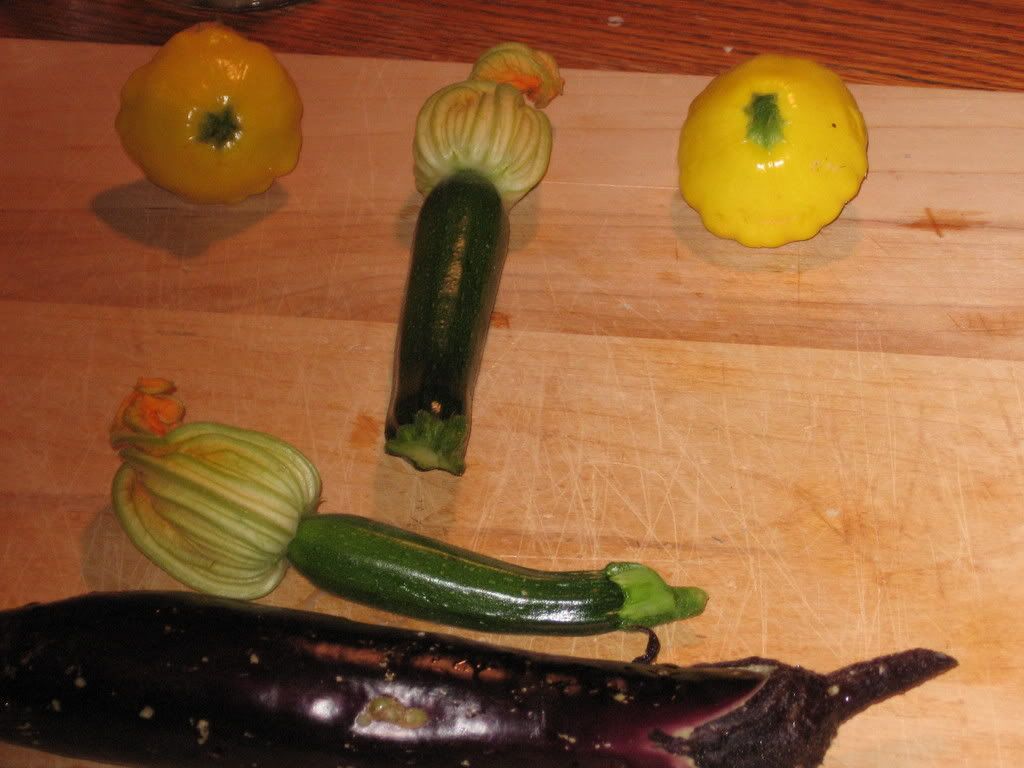
2. Mr. Garden's Pattypan eyes, Zucchini nose and mustache, and Eggplant mouth signal a new phase in Spring/Summer harvests!


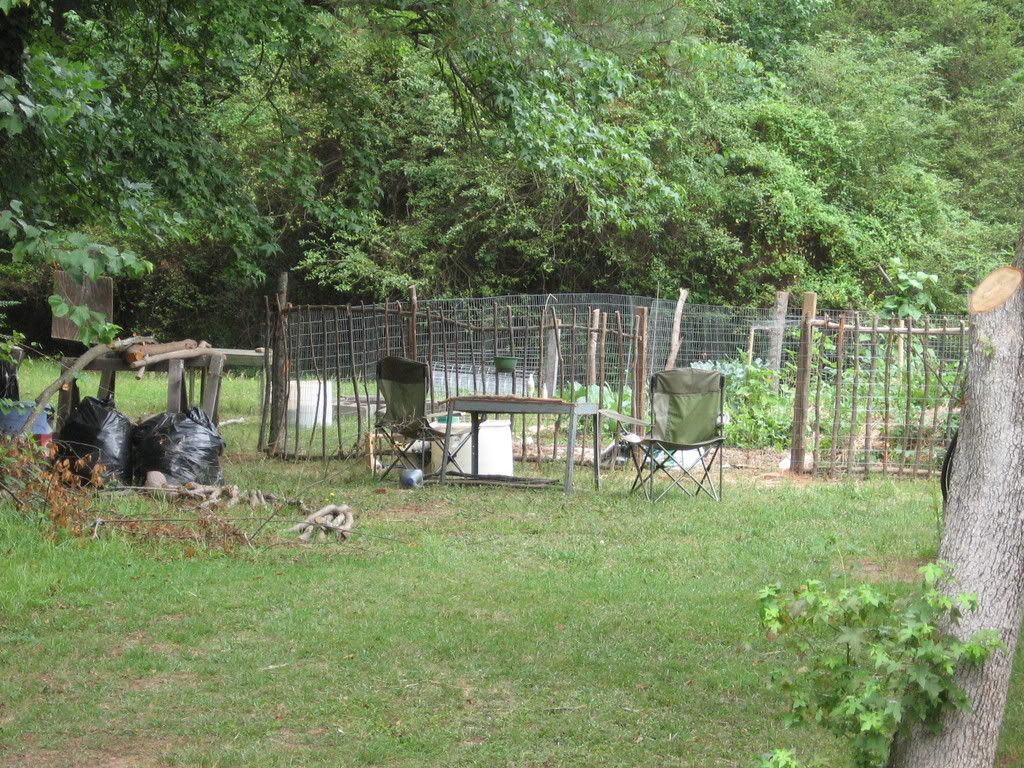
3. After the Deer Attack a few weeks back, and the ever-slower pace of bentwood fence building, we decided to use welded wire fencing. 100' was plenty, costing about $130.00, and the posts already laid in worked perfectly. No more bunnies and deer munching on our Polebeans, Sweet Potatoes and Beets! The first shot below shows the Eastern side of the fence stretching away from the Sugar Maple in the back yard. The second shows the South side of the fence, already finished in bentwood. We still plan on constructing one bentwood wood gate for the Eastern side.


4. M discovered a spray mixture that seems to have detered the bugs who were formerly chewing big holes in our Collards and Eggplants: Cayene Pepper, Dish Soap, Garlic and Onion.

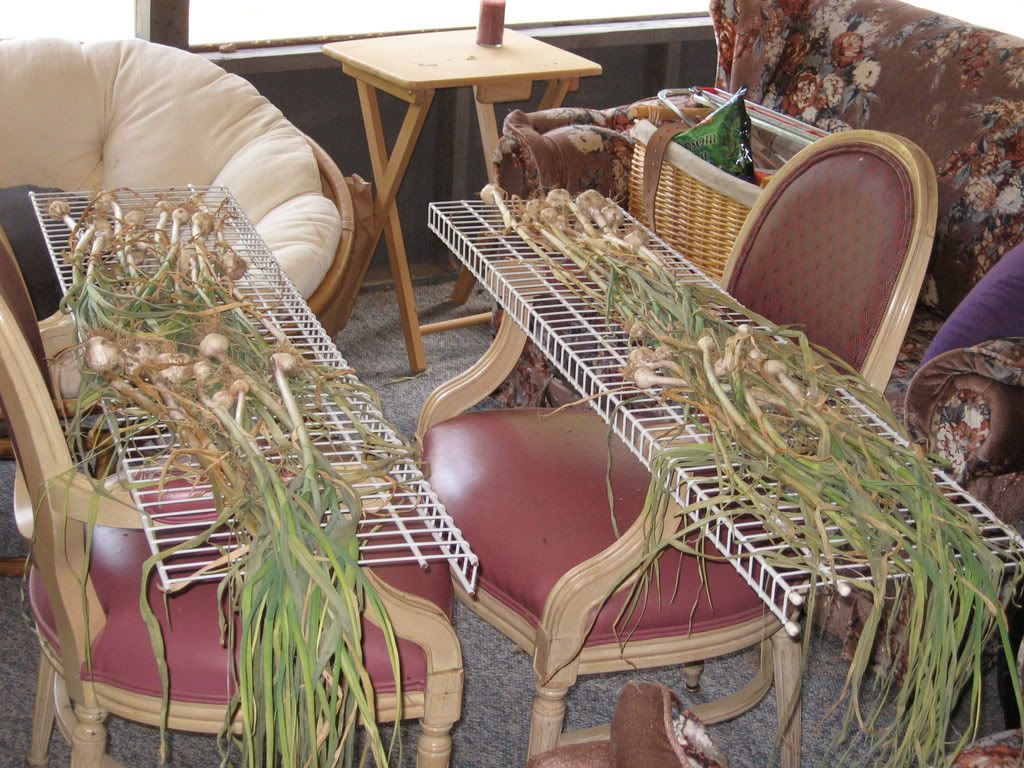
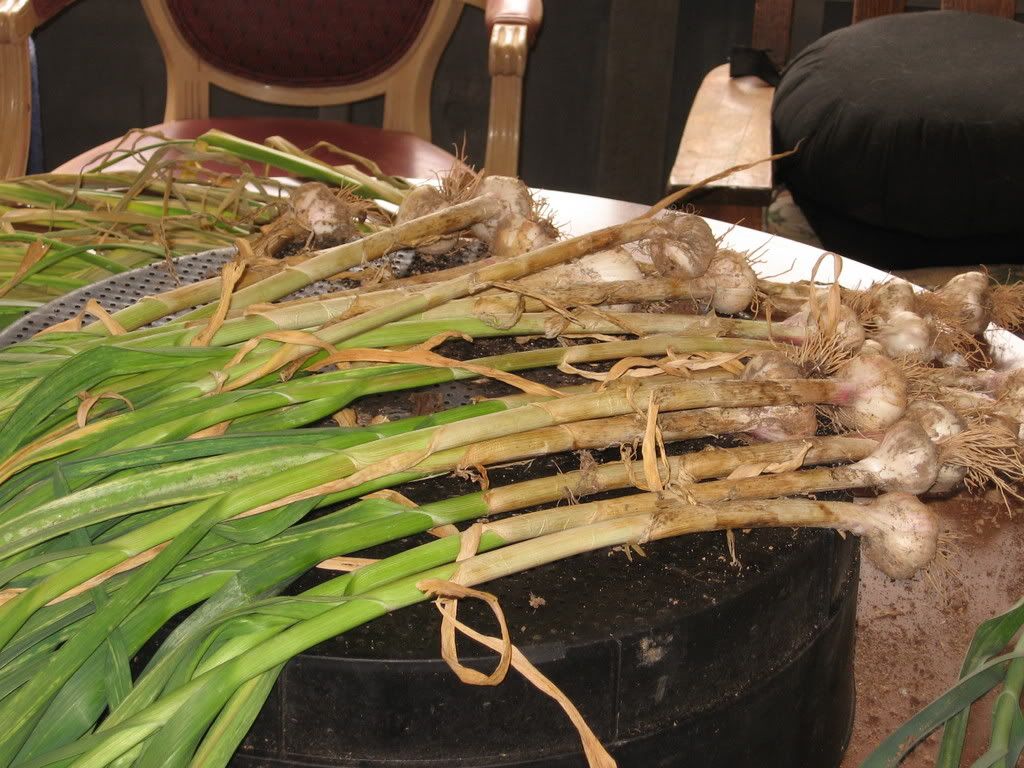
5. We harvested the remaining Garlic, and let it dry (or "cure") on our the back porch for two weeks. We tried to provide lots of room for air to circulate over and underneath to avoid rotting.


6. Once dry, we brought the Garlic into the kitchen, laid them out on two old towels, clipped their stalks, tied them up with string into bundles of 10, and hung them up for storage over the fireplace. We gave one bundle to my folks upstairs, and we're sending one bundle to M's folks. That leaves us 8 bundles for us.


7. We count the Garlic a success, an experiment that shows us not only that we can grow our own Garlic, but the quantity we can expect out of a 5 x 5 Bed. In the future, we'll need probably 10 Beds of this size for a year's supply.

8. While pulling up some wayward volunteer Potato stalks growing in the Cucumber Bed, I discoverd a number of wonderful Ukon Golds! What's amazing about this is that we did nothing to assist these Potatoes, just let them be.


Sunday, June 3, 2007

Morning temp: 60F
Afternoon high: 81F
Tonight's projected low: 61F
Wind: NW at 13 mph
Humidity: 61%
Moon: Waning, 85%
Overall: we've had rows of dark clouds, and sprinkles of rain. We're grateful, and likewise hoping for as much rain as the rain kami would like to give us, gently though!

Getting Caught Up.
1. A few nights past, M tripped over a cement block in a pitch-black parking lot leaving work. As a result, she fractured a bone in her foot, which will take 6 - 8 weeks to heal. We're not certain yet as to whether she'll need surgery. So, I'm somewhat behind on my blogging.

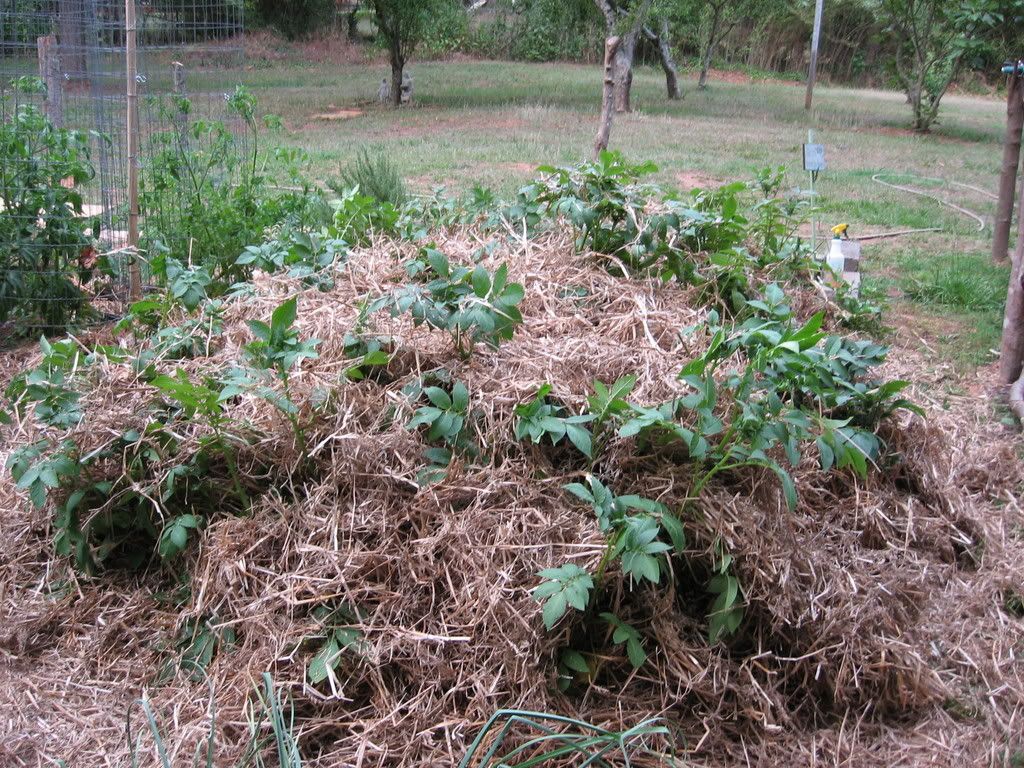
2. Meanwhile, the Potatoes have grow like crazy, and we're late in mulching them. No, this is not a viking burial mound.


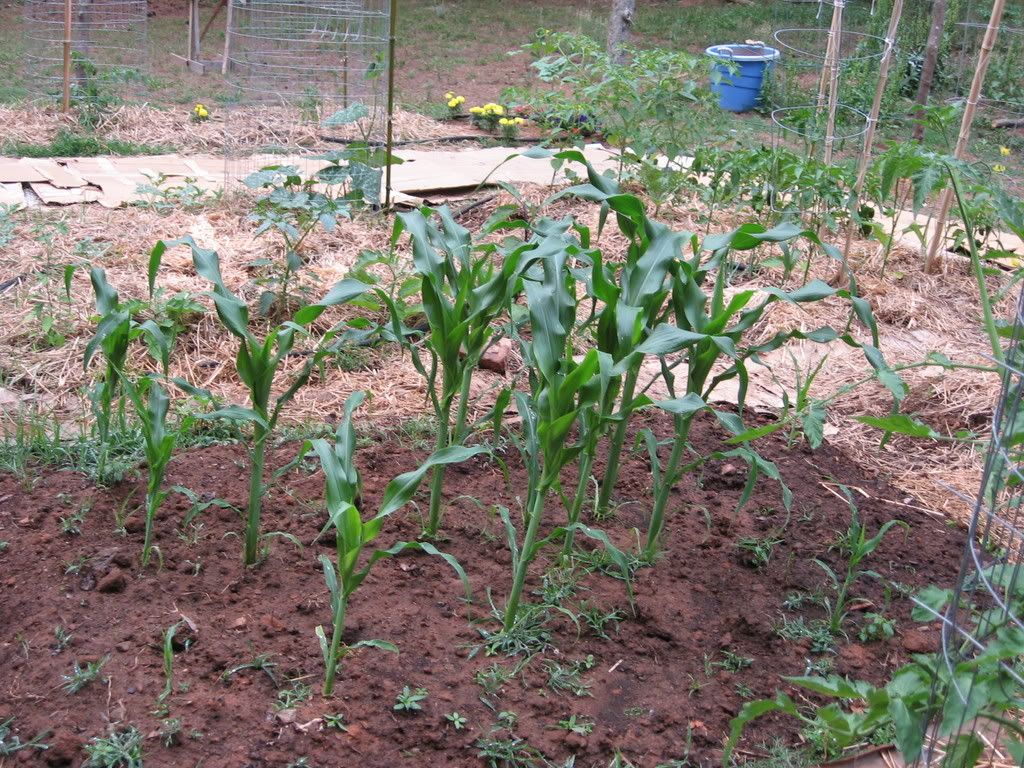
3. The Corn, however, has certainly not grown out of control. Last year we double-planted (i.e., planted pairs of seeds side by side, to better the odds of getting full rows), but in each case both seeds germinated, and we had corn stalk pairs everywhere. This year, we single-planted, and only a few seeds germinated, giving us a modest corn patch thus far : (


4. The Bread making, however, continues to develop nicely. Our next Bread Day, probably tomorrow unless a doctor's appointment gets in the way, we'll post the steps of our current recipee, with photos for each.

Friday, June 1, 2007

Let-us give thanks for a great season!

Morning temp: 60F
Afternoon high: 86F
Tonight's projected low: 62F
Wind: N at 0 mph
Humidity: 69%
Moon: 100% full O

This Morning.

1. With the Lettuce bolting (we just noticed that all of the freshly cut plants grew back quick and straight and narrow), we're marking May 31st as the official end of our Lettuce season. Thank you Spirits of the Lettuce Bed for a wonderful and prolonged harvest, blessing us with too many meals to count (though in the future I would like to see just how many we get from year to year)! I'll soon dig-in the remaining plants, and prepare the soil for a planting of something new.

2. I'm off to purchase two additional soaker hoses, lay them out in one of the officially sanctioned Potato Beds, and mulch the Bed with straw. I'm healing a strain in my right upper back/shoulder, so we'll see how far this work goes.

3. The new, lighter, baguette-style Bread recipe we've derived is wonderful. I'm considering a entry soon that documents each step, for anyone out there who's just a few steps behind us in Breadmaking.

This Afternoon.

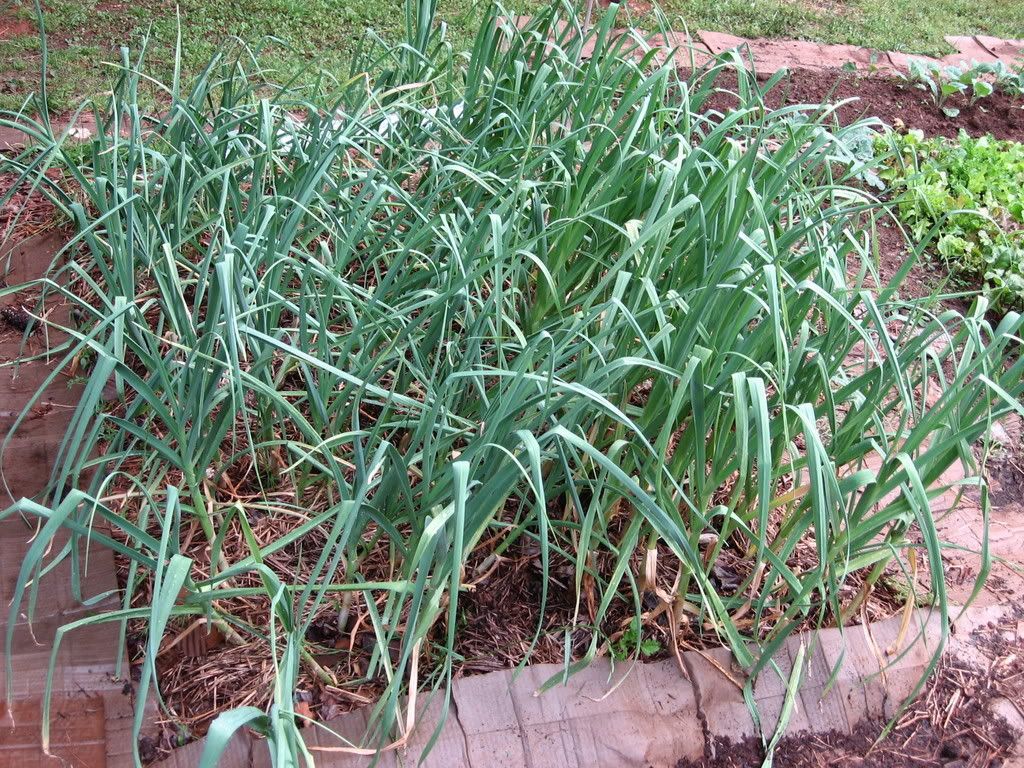
1. With rain coming tomorrow (Thank Goodness & welcome rain Spirits! We need you badly!), we're planning to harvest all remaining Garlic this afternoon. I'll dig this Bed and prepare it for something new as well.

Wednesday, May 30, 2007

Another Garlic Harvest!

Morning temp: 75F
Afternoon high: 88F
Tonight's projected low: 60F
Humidity: 53%
Wind: NE at 5 mph
Moon: Waxing still, almost 100%

This Morning.

1. It's beena hot day, and with a slight upper back strain, I've done little other than basic household chores & lay some cardboard out in and around the garden to keep down the grass.

This Afternoon.

1. M and I brought in a bit more Garlic. I'd say that Bed is about 40% harvested.


Tuesday, May 29, 2007

Summer's coming

Morning temp: 60F
Afternoon high: 85F
Tonight's projected low: 57F
Humidity: 69%
Wind: E at 6 mph
Moon: nearly 100% Full (a good time for transplanting!)

This Morning.

1. It's a beautiful, sunshiny day! We can see the days getting warmer, with day-time highs creeping into the mid-80s, and night-time lows creeping into the 60s. We think we'll be able to keep the Lettuce going so long as the night-time temps remain below 70F. That's what we've heard, so we'll see.

2. I'm spending my morning doing dishes, laundry, sweeping and mopping the kitchen floor, cleaning the bathroom, and learning to make Bread a different way. Thus far, we've learned to make quite hearty, whole wheat loaves using recipes from the Tsajara Bread Book- an excellent book for beginners, as detailed instructions and illustrations are provided for each step of the process. But we'd also like to make lighter, baguette-style loaves, and we're in the early stages of our first attempt right now. I've turned to a different cookbook, How to Cook Everything, for some new ideas.

This Afternoon.

1. Well, the new Bread recipe (from the book How to Cook Everything), as it turns out, is seriously flawed, calling for just 1 teaspoon of rapid-rising yeast for four loaves. That's a minuscule amount; twice that would be parsimonious. As a result, my baguettes are hardly rising at all, though they've sat up for several hours already. Projections for baking these dense little loaves are less than favorable, unless you like to eat rocks! : (

The funny thing is, even with my tiny amount of Bread making experience, I knew that more yeast was called for, though I was reluctant to disobey the "official" instructions. Is this experience a metaphor for life, or what?

Monday, May 28, 2007

Conversations with open minds, how refreshing!

Morning temp: 59F
Afternoon high: 84F
Tonight's projected low: 60F
Humidity: 88%
Wind: E at 5mph
Moon: Waxing, close to 100%


This Morning.

1. As the month of May nears its end, we celebrate a minor success here: we have not used our clothes drier since April, nearly one month! Hanging wash out to dry on the nylon line strung across the yard has actually become a rather meditative exercise in the sunshine and wind, one to which I look forward. Before long, we hope to purchase a hand washer & ringer, which will cut electricity entirely out of the equation (though our water still comes from a centralized municple source). Moroever, the grey-water from our wash, with the help of biodegradable laundry soap, can be used to safely water the Blueberry Grove!

2. Last night we met up with one of M's sons, J., who is home visiting from his college home in Chicago. Luckily, I managed to talk not only with him but with several others we met during the evening about our Homesteading endeavors, and about the movement in general. Everyone's interest seemed peaked when I used words like, "self-reliance", "simplifying our lives", "doing more for ourselves", and even "Homesteading". As is often the case when I get to talk with bright, thoughtful folk, so doing helped me to think through my own understanding further and more clearly than I had previously. This is one reason I loved teaching.

One important dynamic that emerged in these conversations was that Homesteading is a continuum, rather than a set of absolutes. That is, one may engage Homesteading at different levels of intensity and still be a welcomed member of the movement. Some notable Homesteaders have mastered the art of self-sufficiency to such an extent that they have gone several months without spending any money whatsoever, even in the harsh Australian outback-http://www.lintrezza.com/. Others have learned to integrate lush, bountiful gardens, solar-panel energy production, and making their own bio-fuel in their garage into a typical suburban neighborhood, without infuriating their neighbors-http://www.pathtofreedom.com/. We respect and admire these advanced approaches, and would also like to suggest a gradual, incremental approach that can be made to fit any lifestyle whatsoever -http://www.urban-homesteading.com/. Basically, anything we do to increase our self-reliance, use fewer resources, save money and increase our "at home time" may start us down the Homesteading path! Each of these points is of import, and deserves a bit more detail.

i. While the Universe contains an infinite supply of wealth, riches and resources, our current civilization is not doing a very good job of making them equally and reliably available to everyone, nor are we making good decisions as to which resources to use. Clearly, 6 billion Earthlings hooked on oil as a primary power source is not avery good idea, and has created an unfortunate ecological, economic and political reality - one that we will solve, but that may take some serious discipline on everyone's part. Fortunately, some brilliant and disciplined minds are already hard at work on our behalf - http://www.cheniere.org/

Also, right now (in 2007), the money we Americans make is at an all-time low in its purchasing power. While wages have risen in terms of dollars over the past sixty years, what those dollars are capable of purchasing has plummeted. My grandfather (who had a 5th grade education), for instance, worked as a truck-driver and then as meat-slicing machine salesman and made enough money to provide for his family: a nice house in New England, two cars, a lake-side cottage for weekend get-a-ways, a college education for his daughter, and ample retirement savings on his income alone. His experience was typical in 1950, when the middle class was growing at an amazing rate. Two generations later, however, the number of families able to achieve this level of prosperity on two incomes is exceedingly rare. I do not want to paint an apocalyptic or hopeless picture here. Like our ecological difficulties, these economic circumstances simply represent a problem, which we will solve. Fortunately, brilliant thinkers are also hard at work in this arena doing just that - http://www.nesara.us/pages/home.html.

Until new, cleaner and saner realities are embraced, the benefits of using fewer resources and saving money are obvious. I think the following basic realization lies at the heart of the Homesteading movement: "I'll happily learn to cut back where I can do so with a reasonable amount of effort, for instance, purchasing as much of my food as I can from local farmer's (perhaps at real farmer's markets), since the food available at traditional grocery stores is shipped across the country (or even from other countries) and uses a tremendous amount of gasoline (nearly 60% of American gasoline consumption is used to transport food that could be - and used to be in decades past - grown locally!) and thus contributes mightily to greenhouse gases, global climate instability and all of the political amd military disasters that result from our dependence upon oil".

ii. Given these weighty considerations, it's often overlooked that the farther we go down a Homesteading path, the more calm, peaceful, "at home time" we'll get. One of the primary reasons Helen and Scott Nearing (early 20th century Homesteaders who have inspired millions around the world with their most excellent books, chiefly Living the Good Life) was to increase the amount of leisure time in their lives. They time and energy to play music, paint, write, rest, read and enjoy one another's compant and the natural world around them, and they were weary of what they called "the work treadmill": we go to work so that we can purchase things that in many cases we don't need but have been trained by advertisers to desire. But we never seem to get to the point where we have enough money and things to get off the treadmill. Sound familiar?

Once they learn to discard the "work-a-holic" tendencies learned in mainstream culture, Homesteaders are amazed at how learning to do more for themselves allows them to gradually disengage from the "work treadmill", spending greater amount of time at home, at peace. It's exciting to think what will result as Homesteading (on any level) continues to spread as a system of values, philosophy and lifestyle. Our consumption of harmful things will diminish, as our consumption of truly worthwhile things - peace, rest, health producing food, time and energy for creative endeavors and relationships - will grow!

Sunday, May 27, 2007

If you can't Beet it...do something different

Morning temp: 58F
Afternoon high: 86F
Tonight's projected low: 59F
Humidity: 73%
Wind: N at 0mph
Moon: Waxing, 90%+


Corrections.

On yesterday's post, I have a photo of the Cucumber Patch where a photo of the Beet Patch should be. When I attempt to correct it, a cascade of coding errors ensues. So, here are the correct shots.

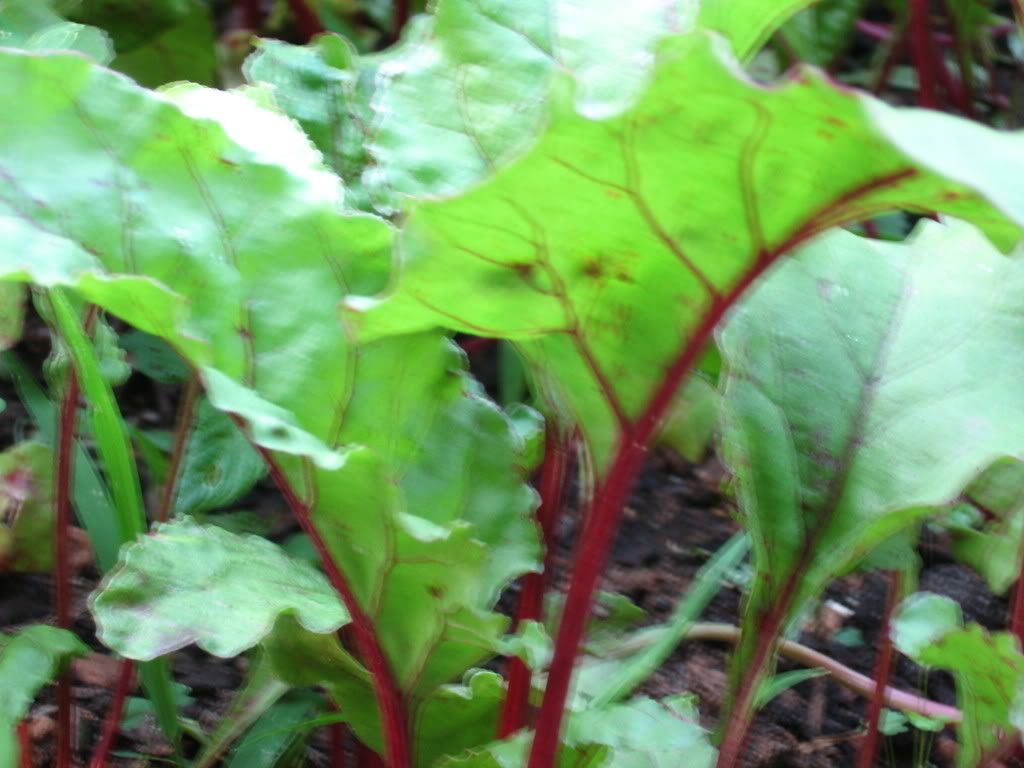
1. A Beet Leaf close-up...


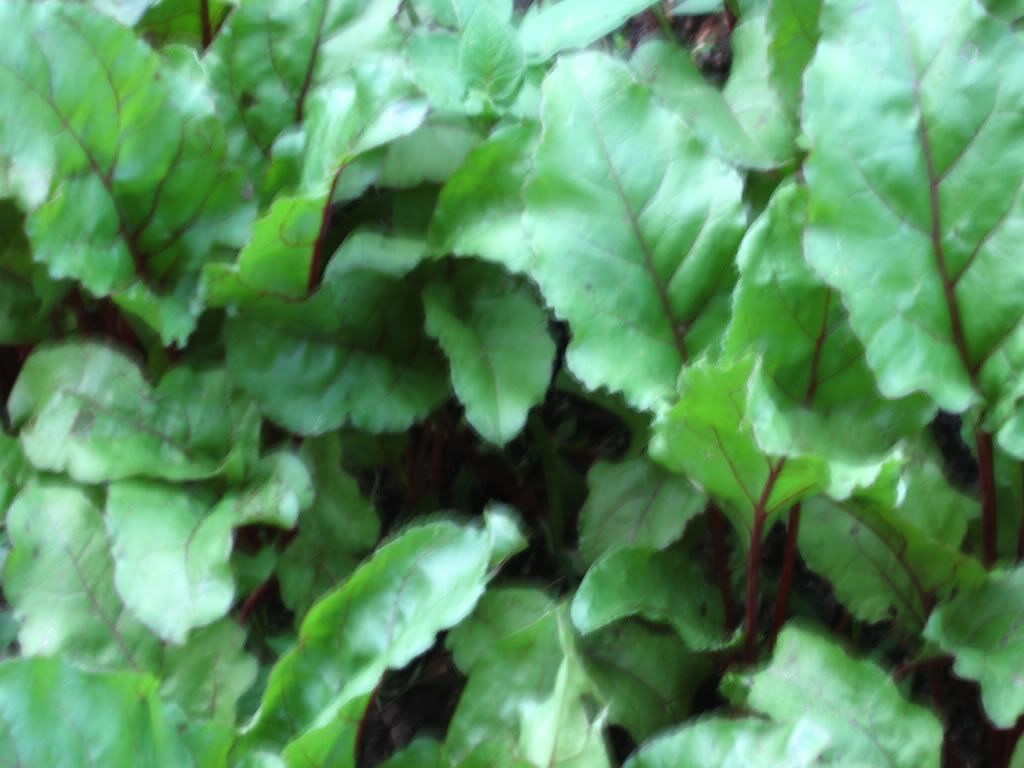
2. A thriving Beet Patch!


This Morning.

1. It's a warm Sunday morning, about 70F, though there's a cool breeze blowing through every now and again. After a long session on the Betar (a table using resonant sound for deep relaxation and healing that I use with clients regularly but, for some reason, often forget to use on myself; you can read more about it in my earlier posts or at http://www.kellyresearchtech.com/) last night, I'm finally able to slow down, enjoy my coffee on the back porch overlooking the Garden. I've been thinking about how "busy" I've felt lately, how for a week or more now I've been fighting back a hurriedness, which of course entails an impatience and frustration at "not getting enough done". Sadly, I've felt this way even when I'm getting things done!

At the same time, I've been drawn back to Benjamin Hoff's charming book, The Tao of Pooh. This book was inspired by the overlap Hoff thought he saw in the American classic "Winnie the Pooh" stories and one of the Three Teachings that make up the complex web of indigenous Chinese religion some Western scholars conveniently label "Taoism" (the other two being Buddhism & Confucianism). "Taoist" teachings and practices - as Hoff points out - are themselves quite diverse, encompassing a wide range of philosophical, monastic and folk traditions. Put differently, there are many different ways one might live and still consider oneself a "Taoist", e.g.., practicing Tai Chi, reading sections from the Tao Te Ching each day, studying acupuncture, using Chinese herbs, and so forth. This morning it's the highly practical teachings of both Pooh and many of the Taoist philosophical traditions I'm concerned with. In the Tao of Pooh, Huff includes the venerable parable, "The Gorge of Lu", which will start us off in the right direction, I think. It goes as such:

"At the Gorge of Lu, the great waterfall plunges for thousands of feet, its spray visible for miles. In the churning waters below, no living creature can be seen. One day, Confucius was standing at a distance from the pool's edge, when he saw an old man being tossed about in the turbulent water. He called to his disciples, and together they ran to rescue the victim. But by the time they reached the water, the old man had climbed out onto the bank and was walking alone, singing to himself. Confucius hurried up to him. 'You would have to be a ghost to survive that;, Confucius said, 'but you seem to be a man, instead. What secret power do you possess?' 'Nothing special,' the old man replied. 'I began to learn while very young, and grew up practicing it. Now I am certain of success. I go down with the water and come up with the water. I follow it and forget myself. I survive because I don't struggle against the water's superior power. That's all'.

How does the old man survive the raging currents of the pool ("in which no living thing can - ordinarily - be seen")? He doesn't fight against the powerful tides and forces he feels pulling him this way and that, but flows with them. He practices what is called Wu Wei, literally "not-striving" against the natural (and sometimes the social) world. How does he accomplish this, when his natural instincts upon being plunged into deep water and strong currents would surely be to gain control of the situation by swimming to the top? Of course, striving against the pool's fierce current would have quickly worn him out and ended his life. Clearly, the old man had achieved a profound level letting go of the need to control. It's interesting that the story implies that both (i) the old man did not fall into the pool accidentally, but chose to extend his practice of Wu Wei (pronounced "Wu Way") to this ultimate level (ii) Confucius did not understand anything the old man was about, suggesting of course a significant difference in philosophy and practice between these two schools, "Taoist" and "Confucian". What's the point of the story? No doubt that living well in the world requires Wu Wei, learning to let of of our deep-seated need to control the forces around us, and to develop the corresponding ability to flow harmoniously with the way the world is. This does not mean, necessarily, that we can't work and hope to change things for the better, but that in so doing we should not find ourselves in the position of "striving", pushing, forcing, fighting and so on. The best tailor, the Tao Te Ching teaches, does little cutting.

So, we have the parable, some sense of what it means, now we must apply it to our 21st century lives. I've no plans for leaping into dangerous tidal pools. It would be both arrogant and foolhardy to think I could accomplish in one day what Taoist sages took years, even decades, to achieve. In our "I must have everything I desire immediately (and I don't want to know about the toll it places on the environment or on other human beings who worked to bring it to me)" culture, this is a point forgotten and, when pointed out, resisted or even resented in many communities: some aspects of spiritual growth take decades of discipline and practice and there's no way around this, so we may have to "put in dollars and get back nickles" for considerable time. My friend E represents a refreshing counter-example to this trend. Her elegant and inspiring book, The Four Spiritual Laws of Prosperity, took her twenty years of teaching and practice to write, and it was worth the wait!

So, can I apply these teachings to simpler, more mundane matters? Perhaps my persistent worries that "I'm not getting enough done" represent my own attempt to control the flow of work each day. To live more healthily and more happily, I'll need to practice setting this habit aside. It's quite well established in me, this urge to achieve the maximum amount of work each day. But every day can't be a mid-summer harvest. If so, the Earth would all too quickly wear out.

When I first went to college I studied classical guitar with a brilliant and internationally known teacher, John Sutherland. I was fortunate to be accepted into the program, as John was considered a Master Teacher by the world's best players, and was regularly sent the best students by them. I had only begun to study the guitar some six months prior to applying for entrance into the program. Many days I practiced 8 hours or more and just barely was admitted (or so it seemed to me). One day in a private lesson, I said to John, "I'm worried that I'm falling behind in my playing." "Behind what?", John asked. "Behind where I should be," I answered. "That's ridiculous," he laughed, "you are where you are. There's no ahead or behind." I'm not sure how, but this story seems to be connected to the above discussion. Perhaps it's another example of needing to control the flow of work. I think I have a great many of such stories, and that it's time to take seriously the Gorge of Lu.

This is a point that I think sometimes gets lost in academic discussion of comparative religion. Whether or not "all religions are paths to the same destination," and whether or not the claims various religions make are true or false, our religious and spiritual traditions can be, at times, "wisdom traditions", that is, repositories for insights that are fantastically useful in living life well, rather than less well.

Saturday, May 26, 2007

Signs of the future

Morning temp: 56F
Afternoon high: 85F
Tonight's projected low: 60F
Humidity: 54%
Wind: Wind: N at 0 mph
Moon: Waxing, 80%!

1. M and I were talking last night, and we came to the realization that our current Garden, while some 1,200 square feet (30' X 40') in size, represents just a fraction of what we want to grow. Increasingly, our planning for the future is drawn toward our likely migration northward, to the "The Land," the 120 acres in upstate New York that awaits us, and for so many reasons. For instance, The Land is replete with fresh water springs, far more than enough for all of our Homesteading needs. Conversely, with the ongoing droughts here in the suburbs of Zone 8, we've already been limited to one day a week watering. This clearly limits our self-reliance on a very basic level: no water, no Garden, no food, save the taste & nutrient-free varieties that have been trucked across the country and are for sale at our local grocery.

Some Good Signs.

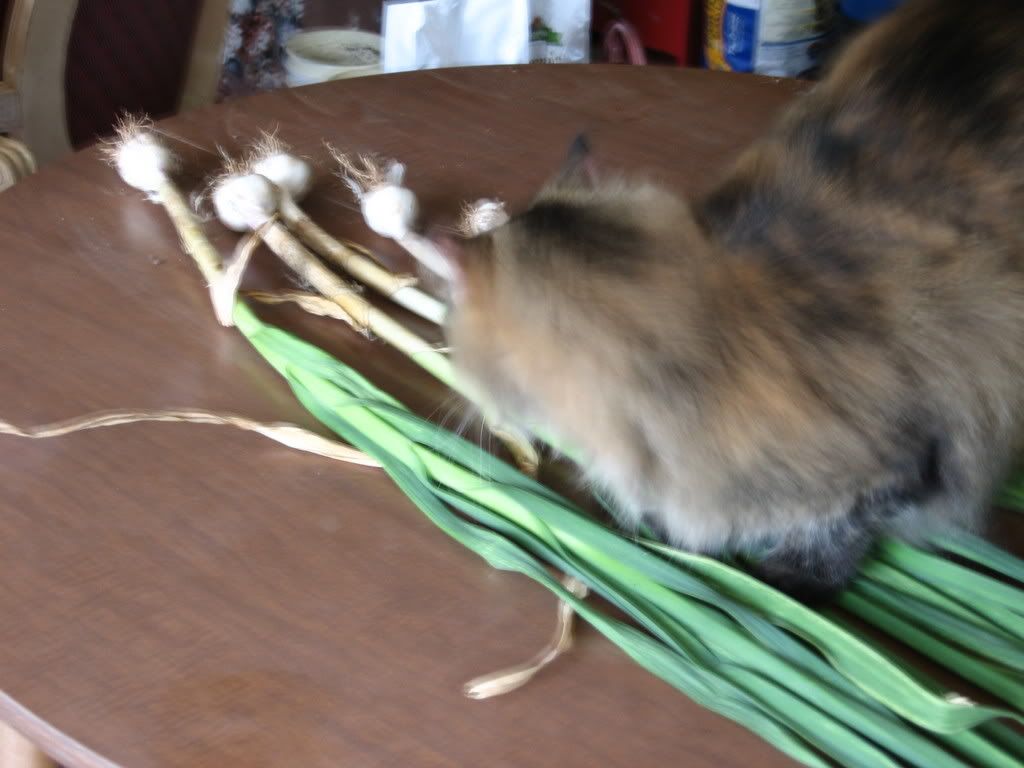
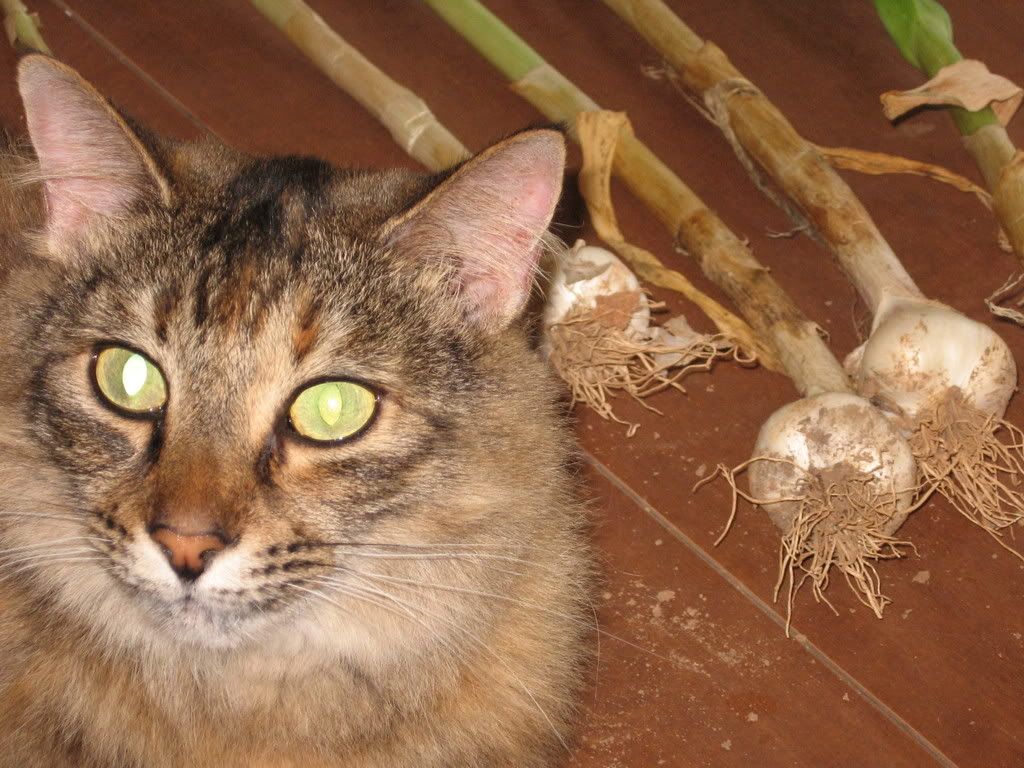
1. Winter Garlic is nearly ready for harvest... Arjuna certanly thinks so.


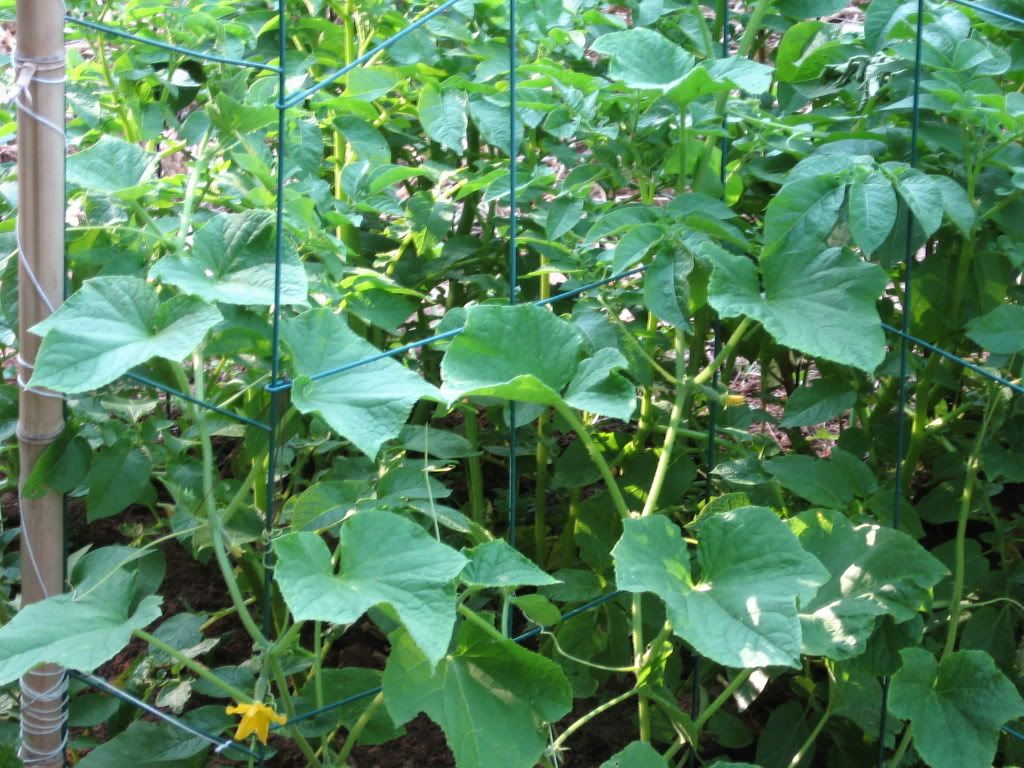
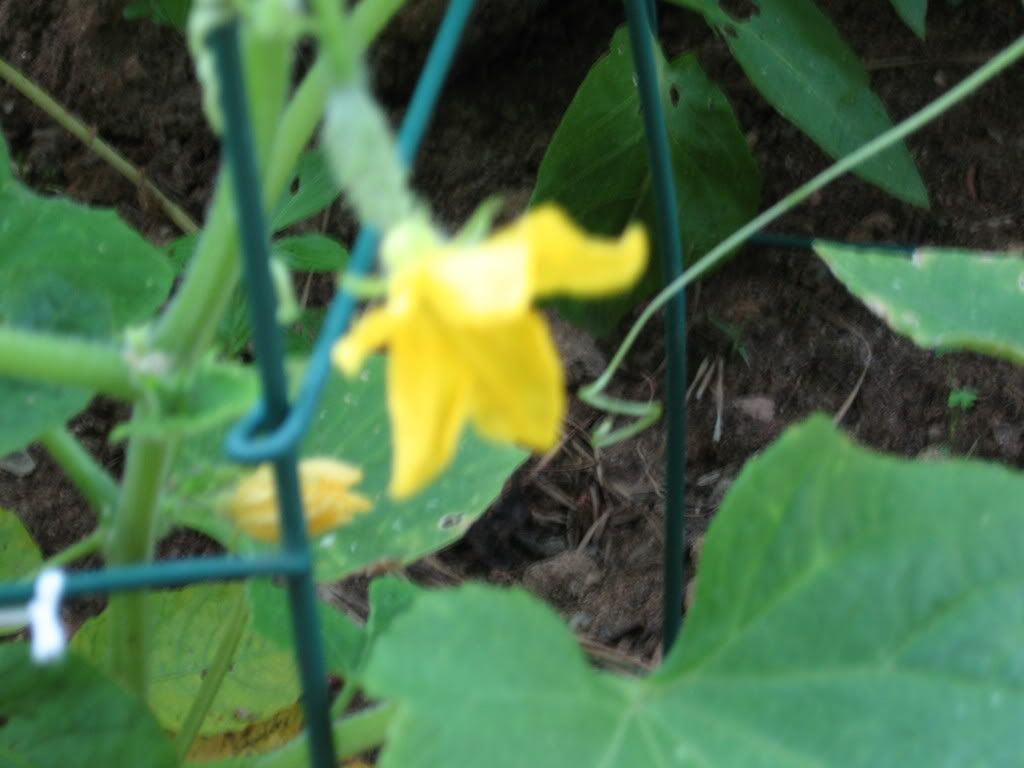
2. Cucumbers growing, blooming!


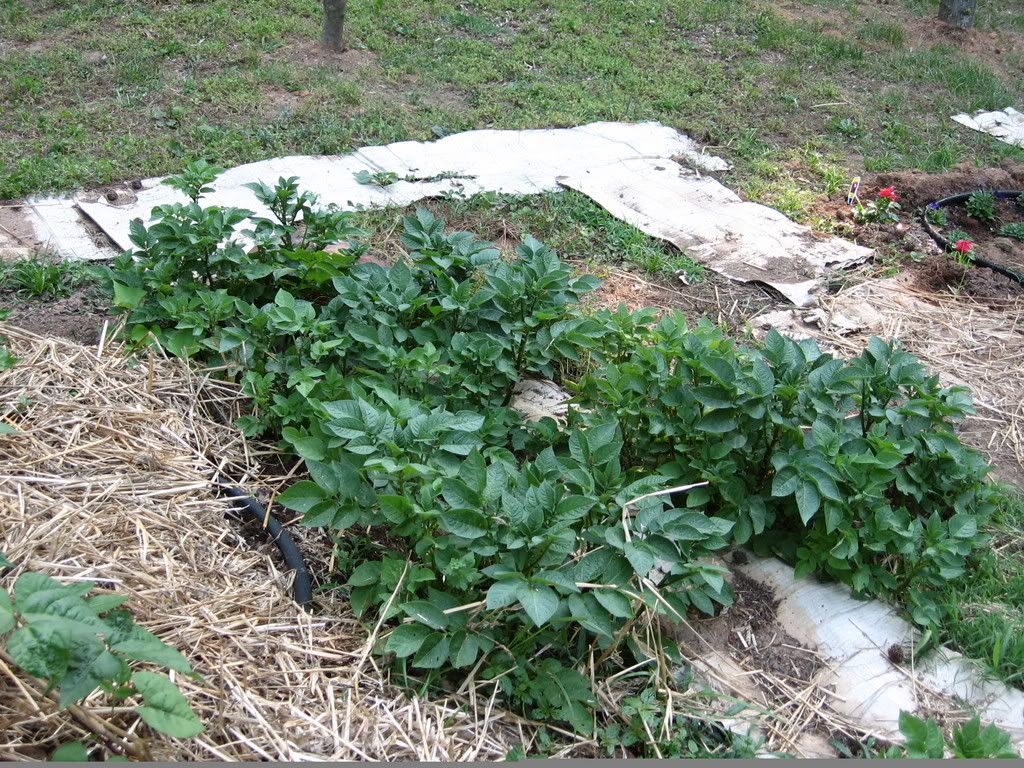
3. Unauthorized & unruly volunteer Potato patches abound!


4. Beets are very healthy...


...and the Beet Patch is thriving! Until now, we'd never grown Beets successfully.


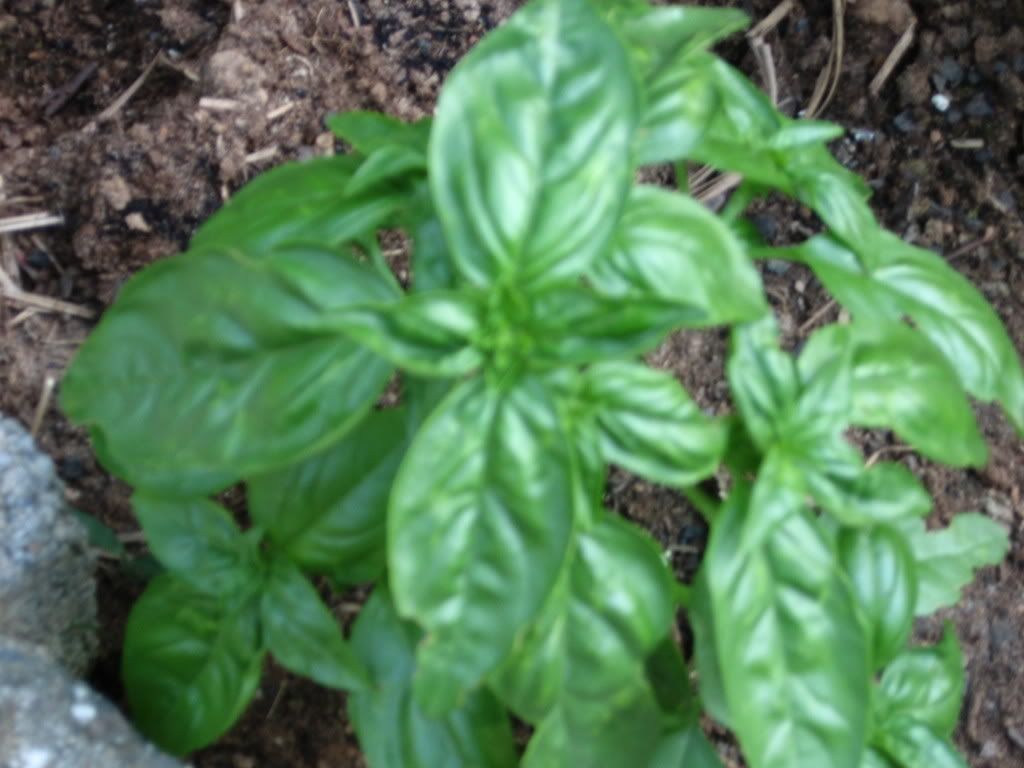
5. Basil is standing tall!


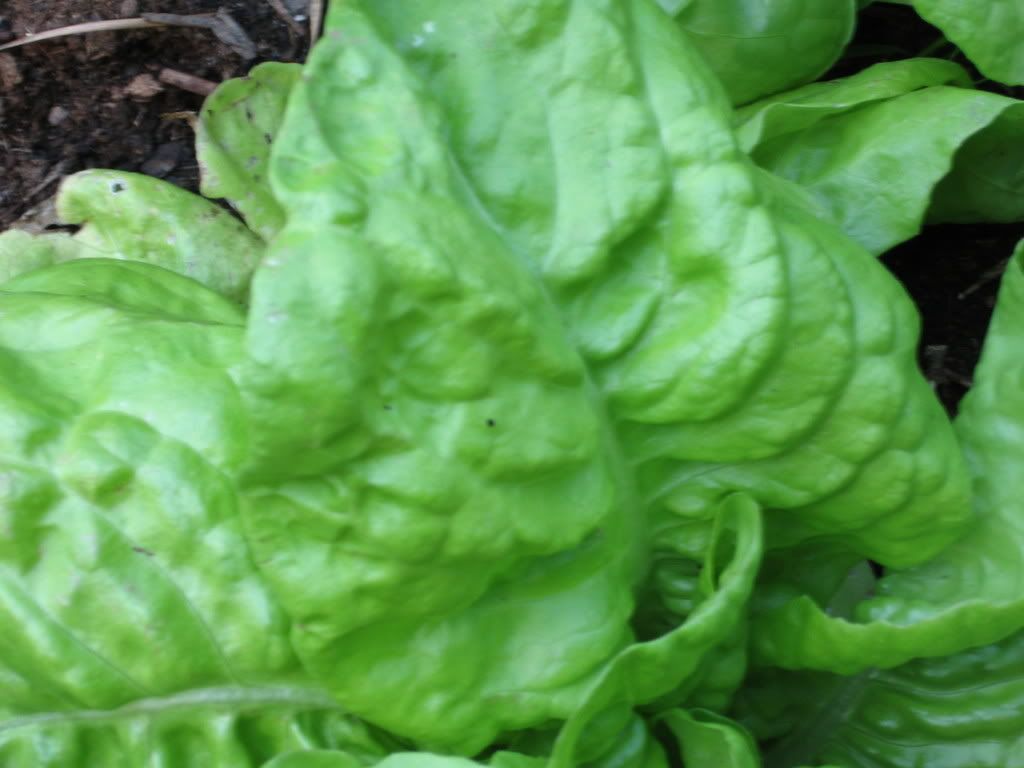
6. Butcrunch Lettuce, looking good!


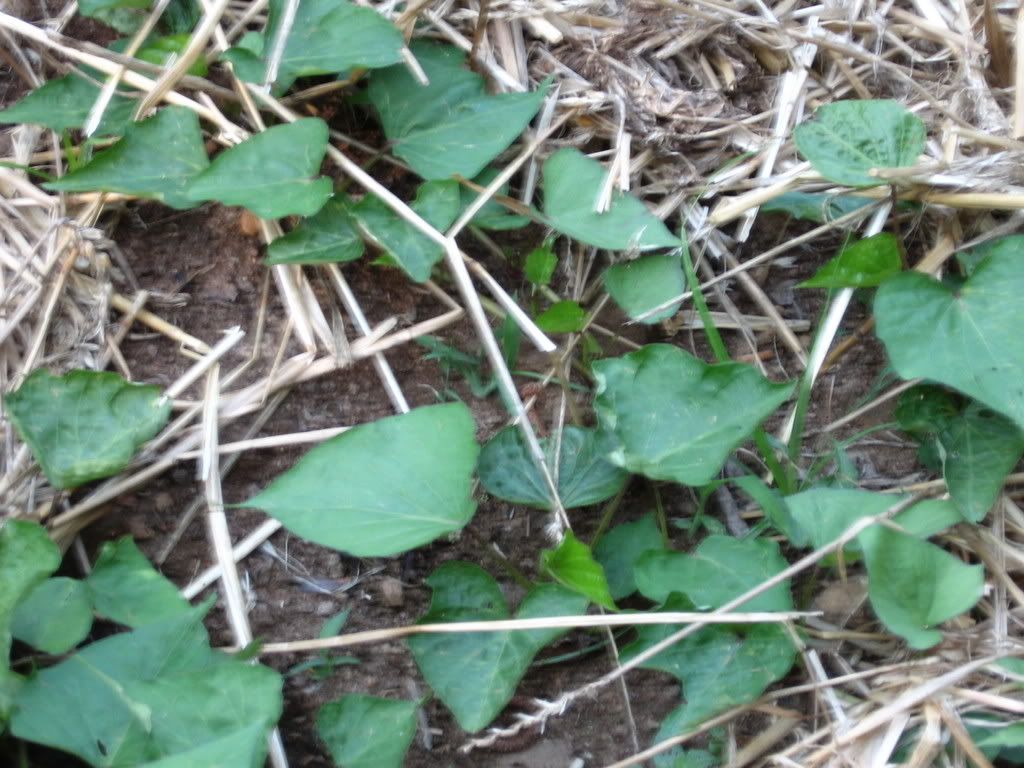
7. Sweet Potatoes are spreading out.


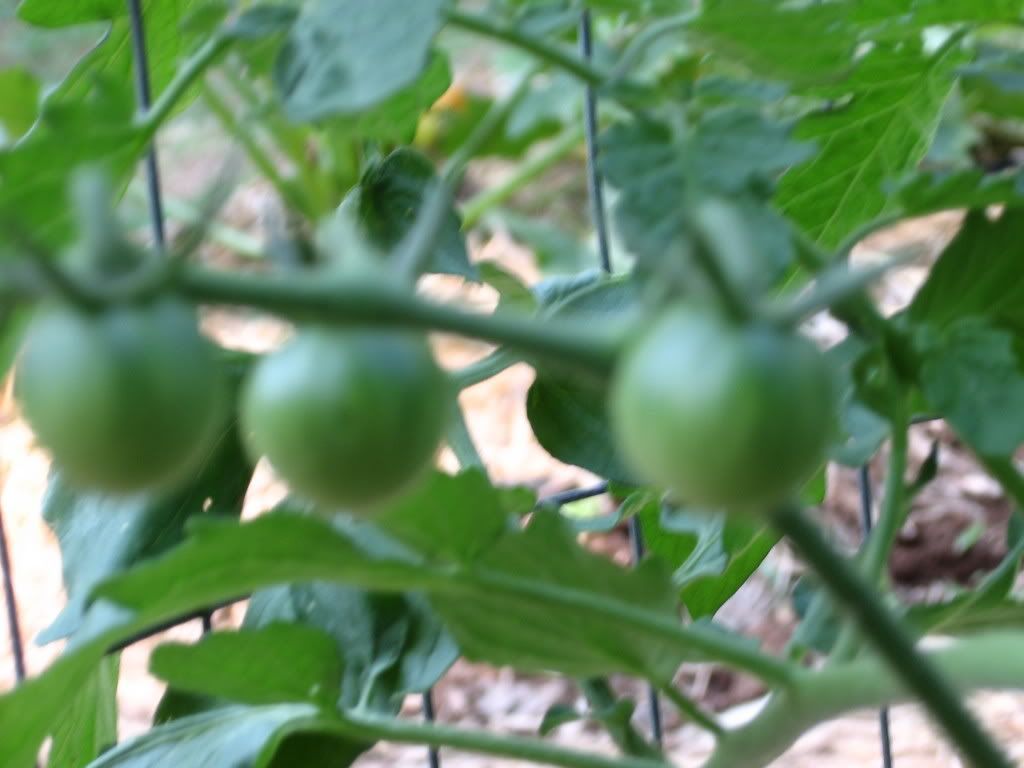
8. Baby Tomatoes have appeared!

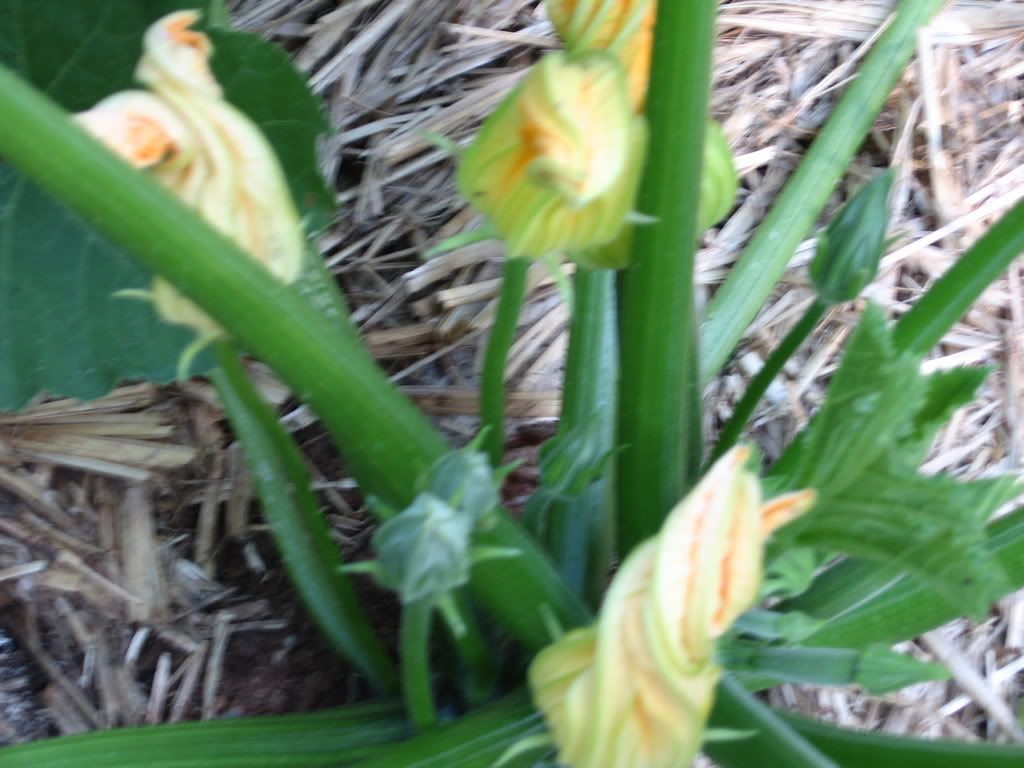
9. More Squash blossoms!


Friday, May 25, 2007

Busy busy busy...

Morning temp: 55F
Afternoon high: 81F
Tonight's projected low: 58F
Humidity: 94%
Wind: N at 0 mph
Moon: Waxing 70%
Overall: Much more cloudy today, and less sunshine probably means it will remain cool, barely exceeding 80F!

This Morning.

1. Helen's waiting - somewhat impatiently - in the hallway for me to decide which room I'm going to work in.


2. And finally I've decided, and she can get down to some serious lying down.


3. Helen... sad after having read Hamlet several timesd over.


Looking to the weekend.

1. M has several days off coming up, and so we're thinking through the Garden work that needs doing that we can best do together. Laying down more soaker hoses and mulch? Weeding? Fertilizing? I'm unsure just now.

2. For myself, I've remained busy keeping the Garden watered, the house clean, the laundry washed and hung out, Helen walked and happy, and the bread made. These past two loaves we made yesterday are by far our best yet.


3. On our two most current and intensive projects - the Garden Fence and Shed - I've made not an inch of progress. This points out, I believe, an irony implicit within a Homesteading lifestyle: as the number of things we do for ourselves each day increases - e.g., growing more of of own food, baking our own bread, cutting our own wood for our the Garden Fence, and so forth - the amount of time and energy we have for each particular project is reduced. This means that our days need to become more efficient and perhaps longer. The danger, of course, lies in creating a stressful environment, which is precisely what Homesteading is meant to avoid. The alternative is to really learn to go slowly, do the best job you can with everything you do, and let it all take time. This is probably why it took Helen and Scott Nearing (the founders of 20th century Homesteading) 17 years to build a stone wall around their Garden! I find it comforting to note how different this approach feels when compared to the ethics of the dominant culture, evident in a recent Home Depot commercial, in which two neighbors are mowing their lawns, one on a rider-mower the other behind a push-mower, each competing with the other to see who can complete their work in the least amount of time. The assumption, of course, is that "yard work" sucks, and that the "really successful" folks in our subdivision are those who can afford the most expensive rider-mowers, race back and forth across their lawns while not getting off their asses, and complete their outside work in minutes. I do not fully understand why this commercial bothers me so much. Perhaps it is because simple, outdoor work has a nobility that has all but been forgotten. No doubt that in a culture of massively over-worked, stressed out, over-weight, malnourished folks, such an attitude towards "yard work" is inevitable. Truly, a major re-alignment of our values, priorities, actions and daily lives will require, not a great catastrophe as some apocalyptic thinkers like to believe, but a Great Blessing that allows us all to get plenty sleep, eat very good food, take long walks by the fields, woods & streams, have heart-to-heart talks about what we really want to do with our lives in a context in which such choices represent realistic options.